Traditional UP Shradh Thali: 11 Dishes and a Cooking Plan
A full Shradh thali can feel daunting when you're cooking for family and trying to serve everything fresh. This traditional Uttar Pradesh-style spread brings together 11 no-onion, no-garlic dishes for Pitru Paksha, with sweet, savory, tangy, and crisp bites on one plate.

You can make the meal more manageable by soaking ingredients early and leaving the frying until the end. For Shradh offerings and serving practices, follow your family's customs.
What Goes Into a Traditional UP Shradh Thali?
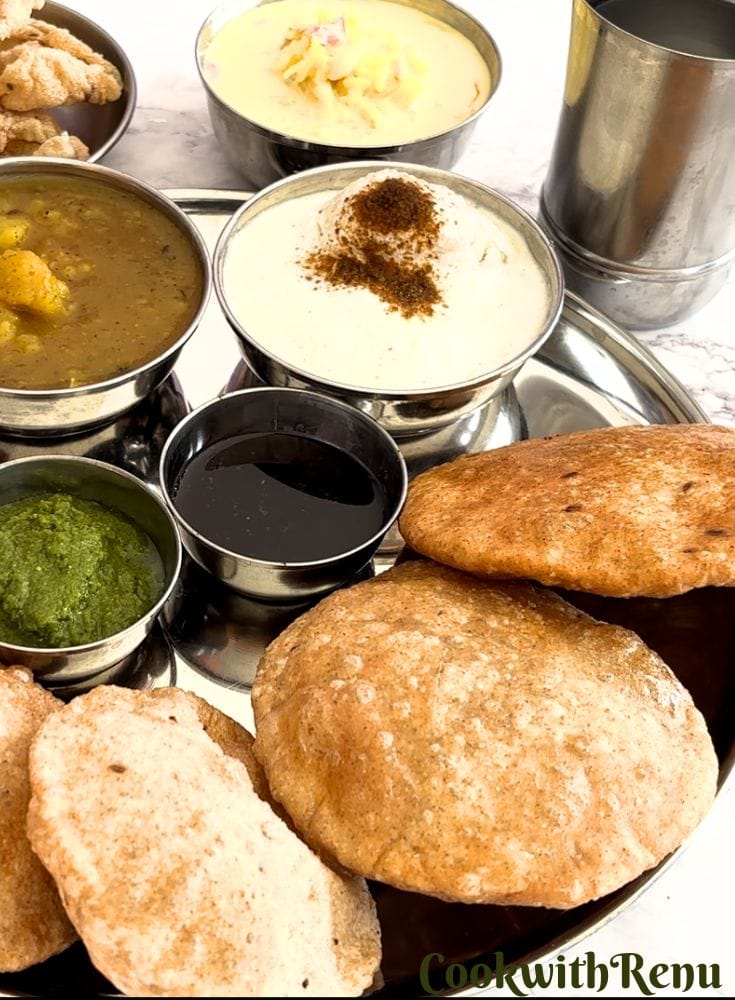
The menu has 11 components: Mathura-style aloo, khatta-meetha kaddu, masaledar bhindi, Bedai puri, plain puri, dahi vada, chawal ki kheer, mooli salad, coriander chutney, tamarind chutney, and poha papad. Together, they make a generous meal without relying on onion or garlic for flavor.
Pitru Paksha is a time to honor ancestors. Ingredients and offering practices differ between families, so treat this menu as a meal plan you can adapt.
The Main Dishes: Mathura Aloo, Pumpkin, and Bhindi
Mathura-style dubki wale aloo is a loose, warmly spiced potato curry. Break the boiled potatoes by hand instead of cutting tidy cubes. The uneven pieces give the curry its chunky texture, while smaller bits thicken the gravy.


Khatta-meetha kaddu pairs tender pumpkin with a sweet-sour seasoning. Masaledar bhindi adds a drier vegetable dish alongside the two saucier preparations. Cumin, ginger, chilies, and other spices permitted by your family's practice give these dishes plenty of flavor without onion or garlic.

Bedai Puri, Plain Puri, and Soft Dahi Vada
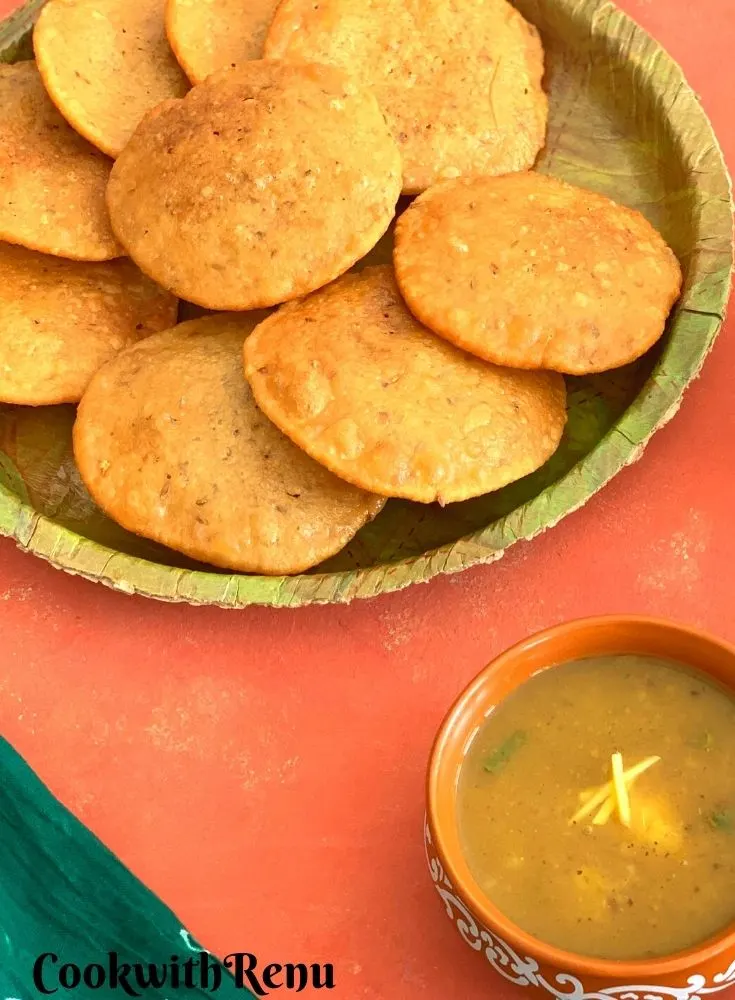
Bedai has a savory urad dal filling inside a fried wheat dough. In our family, we include urad dal dishes such as bedai and dahi vada in the Shradh thali. Also, it's more substantial than a plain puri, so a small Bedai goes a long way on a crowded thali. Plain puris are light and useful for scooping up potato or pumpkin curry.

Dahi vada brings a different texture: fried urad dal fritters softened in water, then covered with cool yogurt. Serve the yogurt and chutneys over the vadas rather than the puris, which taste best straight from the pan.

Kheer, Mooli Salad, Chutneys, and Poha Papad
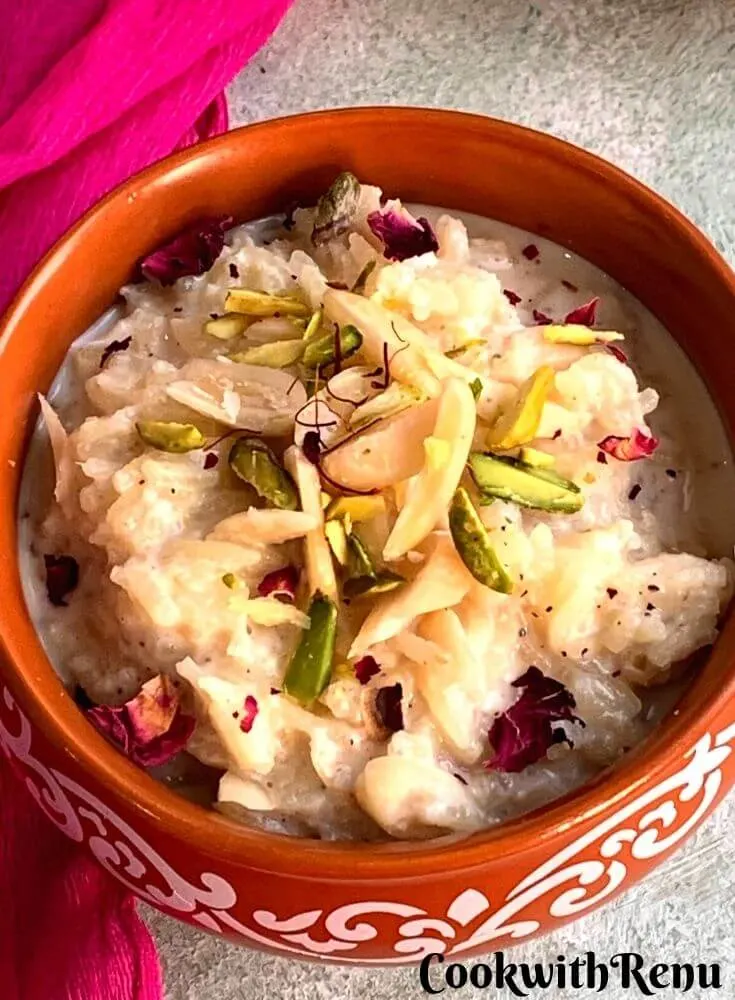
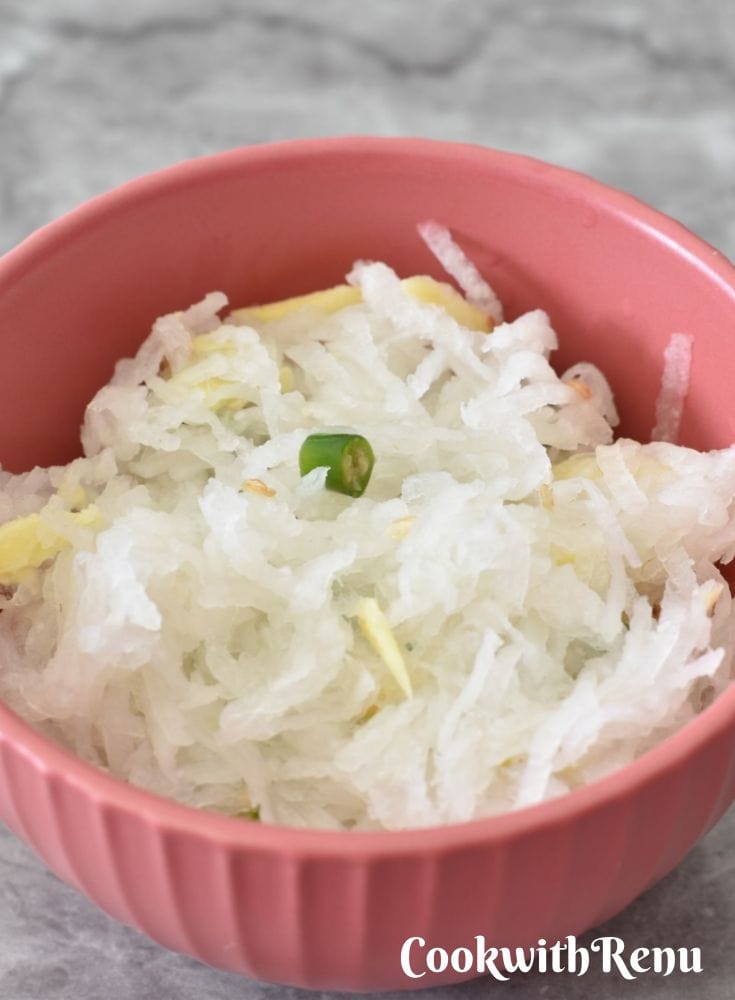
Creamy chawal ki kheer finishes the meal with rice, milk, and sugar. Fresh mooli salad with ginger and lemon cuts through the fried dishes. Coriander chutney brings a sharp herbal note, while tamarind chutney adds sweetness and tang.
Poha papad supplies the final crunch. Keep it dry until serving so it stays crisp beside the curries and yogurt.
How to Prepare the UP Shradh Thali Without Rushing
A practical order matters more than trying to cook all 11 dishes at once. Begin with soaking and chopping, start the slow kheer, then use its cooking time for the vegetables and dal filling. Save frying and the fresh salad for last.
Prep Ahead: Soak the Rice and Urad Dal, and Boil the Potatoes
Rinse and soak the rice for kheer while you gather the remaining ingredients. Soak urad dal several hours ahead: you'll need one portion for Bedai filling and another for dahi vada batter. Drain them separately so the filling can stay coarse, and the vada batter can be ground smooth.
Boil the potatoes until tender, then let them cool enough to handle. Wash the bhindi and dry it thoroughly before slicing; surface moisture can make it sticky in the pan. Cut the pumpkin and prepare the chutneys ahead if that makes serving day easier.
Cook the Kheer and Vegetables While the Dough Rests
Start milk and drained rice in a heavy-bottomed pot over gentle heat. Stir often, scraping the base, especially once the mixture thickens. Keep an eye on it while you work on other dishes.
Meanwhile, knead a firm wheat dough for Bedai and plain puris. Cover it and let it rest while you cook the bhindi and pumpkin. Grind the soaked dal for Bedai coarsely, then cook the spiced filling until it loses its moisture. Let it cool before shaping.
Fry the Bedai, Puris, and Dahi Vada Near Serving Time
Finish the potato curry and mix the mooli salad before heating the frying oil.
Prepare the dahi vada according to the linked recipe and keep it refrigerated until serving. Finish the vegetable dishes before starting the breads. Fry the bedai and plain pooris close to serving time so you can serve them fresh.
Shape only a few Bedai at a time; the filling is easier to seal when the dough hasn't sat stuffed for long.
Fry Bedai over slow-to-medium heat so the dough and filling cook through. Fry plain puris in small batches afterward.
Cook the Three Vegetable Dishes
These quantities make useful starting points for a thali shared by about four to six people. Because everyone will take small portions of several dishes, you can adjust each recipe to suit your gathering.
Mathura-Style Dubki Wale Aloo
Heat 2 tablespoons oil and add 1 teaspoon cumin seeds. Stir in grated ginger, a pinch of hing if you use it, turmeric, ground coriander, and chili to taste. Add four or five boiled potatoes, broken into rough pieces, with about 2 cups water.
Simmer until some potato breaks down and the gravy lightly thickens. Add salt and a little amchur or lemon for a tart finish, according to your family's preferences. Keep the curry loose enough to scoop with puri; it will thicken as it stands.
Detail Recipe for Mathura Ke dubki wale aloo, can be found here.
Khatta-Meetha Kaddu
Cut about 1 pound of pumpkin into small pieces. Heat oil with cumin seeds, then add the pumpkin, turmeric, salt, and a splash of water. Cover and cook until the pieces soften but still hold their shape.
Stir in a little jaggery or sugar and a souring ingredient such as amchur. Taste before adding more of either. The sweet-sour flavor should come through without hiding the pumpkin. Leave the lid off briefly if the pan has too much liquid.
Detail Recipe for Khatta Meetha Kaddu, can be found here.
Masaledar Bhindi
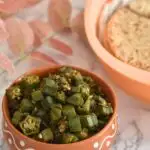
Slice about 1 pound of completely dry bhindi. Heat a wide pan with a little oil and cumin, add the bhindi, and cook uncovered over medium heat. Stir occasionally rather than constantly so the pieces have time to brown.
When tender, add salt, turmeric, ground coriander, and chili if desired. Finish with amchur for a little tang. Adding salt later and cooking without a lid helps the bhindi stay less sticky. Use a wide pan or cook it in batches rather than piling it high.
Detail Recipe for Masaledar Bhindi, can be found here.
Make Bedai, Plain Puris, and Dahi Vada
The fried dishes need the most attention at the stove. Set out the dough, fillings, and a plate for draining before you heat the oil.
Stuff and Fry the Bedai
For the filling, grind about ½ cup soaked, drained urad dal to a coarse paste. Cook it in a little oil with cumin, crushed fennel, ginger, salt, and chili if permitted. Stir until the mixture is dry and crumbly, then cool it completely.
For both kinds of puri, knead about 2 cups of whole wheat flour with 2 tablespoons of oil, salt, and enough water to make a firm dough. Divide it between Bedai and plain puris. Enclose small portions of filling in dough balls, seal well, and roll gently. Fry until golden and cooked through.
Fry the Plain Puris
Roll the unfilled dough into small rounds of even thickness. Slide one into hot oil and gently press it with a slotted spoon to help it puff. Turn once, then drain when both sides are golden.
Plain puris fry faster than stuffed Bedai, so watch the heat and work in batches. A puri that darkens immediately needs cooler oil; one that sits greasy in the pan needs slightly hotter oil.
Soften the Dahi Vada
Grind about ½ cup soaked urad dal with as little water as possible. Beat the thick batter until it looks lighter, then drop small spoonfuls into hot oil and fry until golden.
Soak the fried vadas in warm water for several minutes. Squeeze gently between your palms and place them in a serving dish. Cover with whisked, lightly salted yogurt. Add coriander and tamarind chutneys just before serving, if that suits your family's Shradh customs.
Finish the Kheer and Prepare the Fresh Sides
These components bring coolness and acidity to a thali with several fried foods. Most can be ready before the last batch of puris goes into the pan.
Simmer Chawal Ki Kheer
For a modest serving of kheer, use about ⅓ cup rinsed rice and 5 cups whole milk. Simmer in a heavy-bottomed pot, stirring frequently, until the grains are soft and the milk has thickened. Sweeten with sugar to taste only after the rice has cooked.
Add cardamom if your family uses it. Kheer thickens further as it cools, so leave it slightly looser than you want at serving time. If needed, stir in a splash of warm milk before bringing it to the table.
Mix Mooli Salad and Both Chutneys
Grate or finely cut one mooli, then toss it with grated ginger, lemon juice, and a little salt shortly before serving. If the radish releases a lot of water, drain the excess so the salad doesn't soak the plate.
Blend coriander with ginger, green chili, lemon juice, salt, and a little water for green chutney. For the second chutney, simmer tamarind pulp with water and jaggery or sugar until pourable and sweet-tangy. Cool it before serving beside the yogurt.
Crisp the Poha Papad
Fry or roast the poha papad according to its package directions. I have used my homemade poha papad, which I fried.
Let each papad cool uncovered so steam doesn't soften it. Put it on the thali at the last moment, away from kheer, chutneys, and curries.
Key Tips for Flavorful Satvik Shradh Thali Recipes
Small texture and seasoning choices make the spread easier to cook and more pleasant to serve. Keep your family's ingredient rules in mind throughout; satvik practices are not identical in every household.
Get the Right Texture in Kheer, Aloo, and Bedai
Stir kheer frequently and reach the corners of the pot, where milk can catch. Hand-breaking the potatoes gives the aloo curry both bite-sized pieces and a naturally thicker gravy.
For Bedai, cook off the moisture from the urad filling and cool it before stuffing. A wet filling can tear the dough or escape into the oil. Bedai also doesn't need to puff like a plain puri: a crisp exterior and a cooked center matter more.
Season Carefully and Check Hing Labels
Use chilies, sugar, lemon, amchur, and tamarind in amounts that work for your guests and your family's customs. Start small, then taste. Serving chutneys separately also lets each person adjust the plate.
Some hing is compounded with wheat flour. If you cook for someone with gluten intolerance, check the label and choose a clearly labeled gluten-free product or leave hing out. Bedai and plain wheat puris still contain gluten, so keep suitable dishes separate and avoid shared oil if cross-contact is a concern.

Arrange the Thali for an Appealing, Easy-to-Serve Meal
Place kheer and dahi vada in small bowls, with the potato curry and kaddu in their own bowls or compartments. Add bhindi, mooli salad, and both chutneys where guests can reach them without spilling over the breads. Set down Bedai and plain puris hot, then add poha papad last.
If the meal is part of a Shradh observance, follow your family's order for preparing and offering food before serving.
Watch my full video on youtube for this Traditional UP Shradh Thali Recipe | 11-Item Satvik Pitru Paksha Thali (No Onion No Garlic)
Recipe Links for Traditional UP Shradh Thali Recipe | 11-Item Satvik Pitru Paksha Thali (No Onion No Garlic)






Mooli Salad (Grated Radish Salad)
 Print
Pin
Rate
SaveCook ModeShare Recipe
Print
Pin
Rate
SaveCook ModeShare RecipeIngredients
- 1 medium white radish mooli, about 1 cup grated
- 1 green chilli finely chopped, or to taste
- 1 teaspoon finely chopped fresh ginger
- 1 to 2 teaspoons lemon juice to taste
- Salt to taste
Instructions
- Wash and peel the radish. Grate it into a mixing bowl.1 medium white radish
- Add the chopped green chilli and ginger.1 green chilli, 1 teaspoon finely chopped fresh ginger
- Add the salt and lemon juice. Mix well.Salt, 1 to 2 teaspoons lemon juice
- Taste and adjust the salt, lemon juice, or chilli as needed.
- Serve alongside your thali or a regular Indian meal.
Video
Notes
For the freshest texture: Add the salt and lemon juice close to serving time. Radish releases water after adding salt.
Keep it simple: The version in the video uses just radish, green chilli, ginger, salt, and lemon juice.
Recipe video: Traditional UP Shradh Thali
Tried this recipe? Please comment and rate the recipe. Share your pics and tag us.
Subscribe to my email list to get the new recipes straight into your mailbox.
Join our Whatsapp Community to get direct recipe links. Join here.