Quick Aamras Thali Recipe in 1.5 Hours
Mango season doesn't need a long menu to feel special. This Aamras thali gives you a full meal with two kinds of pooris, a quick potato sabzi, a fresh salad, and chilled aamras, all in about 1.5 to 2 hours when you follow the right order.
It feels shahi, but the cooking stays practical. Start with the potatoes and dough, chill the aamras early, and fry the pooris last so they reach the plate hot and puffed.

The easiest order to make this aamras thali
This meal moves fast when you stack the tasks the right way. Instead of cooking one item fully and then starting the next, keep the rest time and cooling time working for you.
| Step | What to do | Why it helps |
|---|---|---|
| 1 | Boil the potatoes | They cook while you make both doughs |
| 2 | Knead the poori doughs | The dough gets time to rest, which helps rolling |
| 3 | Make the aamras | It can chill in the fridge while you finish the savory dishes |
| 4 | Cook the aloo sabzi and prep the salad | Both are quick and can be done before frying |
| 5 | Roll and fry the pooris | Pooris taste best when served hot |
This flow keeps idle time low. While the potatoes cool, the dough relaxes. While the sabzi cooks, the salad comes together. By the time the pooris hit the oil, everything else is ready.
That balance is what makes this thali feel special. You get sweet aamras, savory potato, crisp salad, and two different pooris on one plate, without spending half a day in the kitchen.
Ingredients for the full thali
The ingredient list is short and familiar, which is part of the appeal. Everything here is home-style, and the meal is made without onion and garlic.
If you want the full recipes, check out my detailed post on each: crispy fluffy sada puri recipe, a besan ki missi puri recipe, and aamras without a blender.
Start with the potatoes and both poori doughs
Boil the potatoes first
Put 2 potatoes in a cooker and let them boil first. If that suits your kitchen better, you can also cook them in the microwave. The main idea is to get them going before anything else, because the rest of the thali builds around that time.
Once the potatoes are on, move straight to the dough. This saves time and gives both doughs a chance to rest before rolling.
Make the besan missi poori dough
In a bowl, combine 1 cup wheat flour and ¼ cup besan. Add whole cumin seeds, red chili powder, turmeric, salt, and a little oil. Mix that dry base first so the spices spread evenly through the flour.
Now add water slowly and knead a slightly stiff dough. It should not be hard like a tight lump, but it should be firmer than roti dough. For 1 cup bowl of whole wheat flour around ½ cup of water is enough, but your flour may need a bit more or less.
Knead for 1 to 2 minutes so the dough turns smoother and gets some stretch. Once it's ready, rub a few drops of oil over the top. That small step stops the surface from drying out while it rests.
Keep poori dough firmer than roti dough. If it turns too soft, the pooris may not puff well and can absorb more oil.
Knead the plain wheat poori dough
For the second dough, take wheat flour in another bowl and add salt, whole cumin seeds, and a little oil. Mix it first, then add water slowly and knead it to the same kind of texture, slightly stiff and smooth.
This dough also needs 1 to 2 minutes of kneading. That short extra effort helps give the dough enough elasticity for rolling and frying. Cover both doughs and let them rest while you finish the rest of the thali.
Resting matters here. A dough that sits for a bit becomes easier to roll, smoother at the edges, and more likely to fry evenly.
Blend thick, chilled aamras
Prepare the mango pulp
Aamras is the heart of this thali, so start it while the dough rests. Hapus, also called Alphonso mangoes, are used here. Wash them well, then cut and scoop out the pulp with a spoon.
Making a few cuts in the mango flesh before scooping helps it drop into the mixer more easily. Don't ignore the seed area either. Peel off the thin skin around the seed and scrape out the pulp with a knife or spoon.
If you don't want to use a blender, you can still make aamras by softening the mangoes first and then pulling out the pulp by hand. A strainer also works if you prefer to collect the pulp that way.
Blend and adjust the texture
Add the mango pulp to a mixer jar. Then add sugar, a pinch of salt, cardamom powder, and some milk. A useful little trick is to pour the milk into the bowl that held the mango pulp first, then empty that into the jar. You pick up any mango left behind, so nothing goes to waste.
Blend until smooth. If the aamras feels too thick, add another 2 to 3 teaspoons of milk and blend again. Some people skip milk, but a little can mellow the richness and give the aamras a softer finish.
Pour it into a serving bowl and chill it in the fridge. You can finish it with a light sprinkle of cardamom powder and a mint leaf if you like the look of it. Cold aamras against hot pooris is what makes this thali feel like a proper summer meal.

Cook the aloo sabzi and fresh salad side by side
Make the no-onion, no-garlic aloo sabzi
Once the potatoes are cool enough to handle, peel them and cut them into rough cubes. They don't need to be neat. In fact, rough pieces work well because the edges catch the spices nicely.
Heat oil in a small kadhai. Add mustard seeds and let them crackle. Then add green chili and curry leaves, and let them sizzle for a few seconds. After that, stir in turmeric and red chili powder.
Now add the potato cubes and mix them through the masala. Add salt, cover, and cook on low to medium heat for 5 to 6 minutes. Since the potatoes are already boiled, this step is mostly about coating them well and letting the flavors settle.
Stir once in a while so the potatoes don't catch at the bottom. Finish with chopped cilantro, switch off the heat, and keep the sabzi aside until serving.
Toss the lettuce and tomato salad
The salad is quick, but it does a lot for the plate. It cuts through the richness of the pooris and adds crunch beside the soft aamras and potatoes.
Separate the lettuce leaves, wash them well, and shake off the extra water. Fold the leaves and chop them into bite-sized pieces. Put them in a bowl, then add one finely chopped tomato. If you like a little heat in salad, add some finely chopped green chili too.
Season it with salt, lemon juice, chopped cilantro, roasted peanuts, and black pepper powder. The peanuts matter here because they add texture and make the salad feel complete instead of plain. If you don't have peanuts, other nuts can fill that role.
Mix it well, cover it, and keep it aside. You can also refrigerate it until the pooris are ready.
Roll and fry pooris that puff well
Shape smooth dough balls
By now, both doughs should be rested. Rub a drop or two of oil over the surface again and knead each dough very lightly to smooth it out.
Break the dough into small portions. Then roll each one between your palms until the outside looks smooth and crack-free. A light film of oil on your hands helps here, especially with the besan dough.
This step may look small, but it helps later. Smooth dough balls roll more evenly, and even rolling is one of the main reasons pooris puff well in hot oil.
Roll with oil, not dry flour
Heat oil in a kadhai over medium heat. In the video, the induction setting used was 7 out of 9, which gives a medium level of heat. While the oil heats, start rolling the pooris.
Dip each dough ball lightly in oil and roll it out. Don't use dry flour for this step.
Use oil while rolling pooris. Dry flour falls into the hot oil, burns, and can make later pooris stick or color unevenly.
Roll with even pressure so the poori stays uniform. It shouldn't be too thick, and it shouldn't be paper-thin either. Also, try to roll on one side instead of flipping the dough over again and again. That helps the poori stay even and improves the chance of a good puff.
Place the rolled pooris on a plate, but don't stack them directly on top of each other. They can stick together if they sit like that. If you're working alone, rolling 1 or 2 batches ahead makes frying smoother.
Fry on medium heat for the best puff
Good pooris depend on heat control as much as dough. Start by testing the oil with a tiny bit of dough. If it rises to the top at once, the oil is ready.
Then follow this frying rhythm:
- Slide one poori gently into the oil and leave it alone for a few seconds.
- When it starts to rise, press it lightly with a spoon or slotted ladle so hot oil washes over the top. That push often helps it puff fully.
- Once the first poori is on its way, add a second one if you're comfortable frying two at a time.
By the time a poori puffs, the first side is usually cooked enough to turn. Flip it and fry the other side for 1 to 2 minutes. If the oil feels too hot and the first poori browns too fast, lower the heat a little. When you add more pooris, the oil temperature drops anyway, so keep adjusting as you go.
After 7 or 8 pooris, give the oil 30 to 40 seconds to heat back up. That short pause helps maintain the right temperature. If the oil cools too much, the pooris won't puff well.
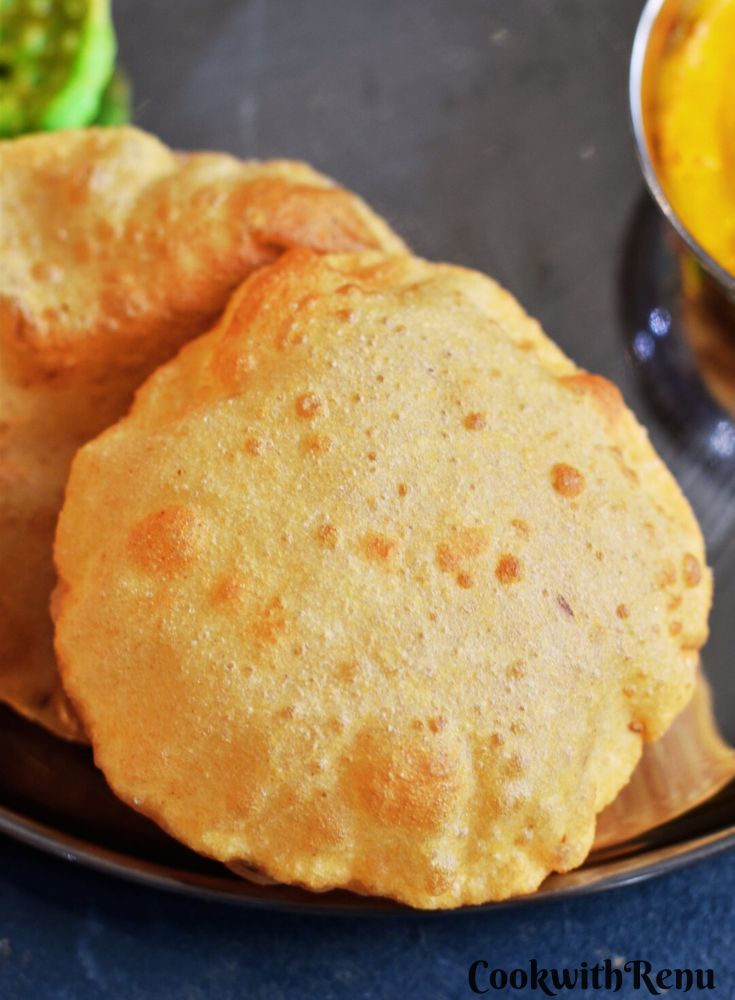
The besan missi pooris will look darker than the plain wheat pooris, and that's normal. Besan and spices give them a deeper color. When lifting the pooris out, hold them at the side of the kadhai for a moment so extra oil drains back.
Serve the pooris hot if you can. Still, they hold up well. In cooler weather, they can stay good for 1 to 2 days. That makes them handy for tea-time snacks, tiffin, or even travel food.
Serve the thali while the pooris are hot
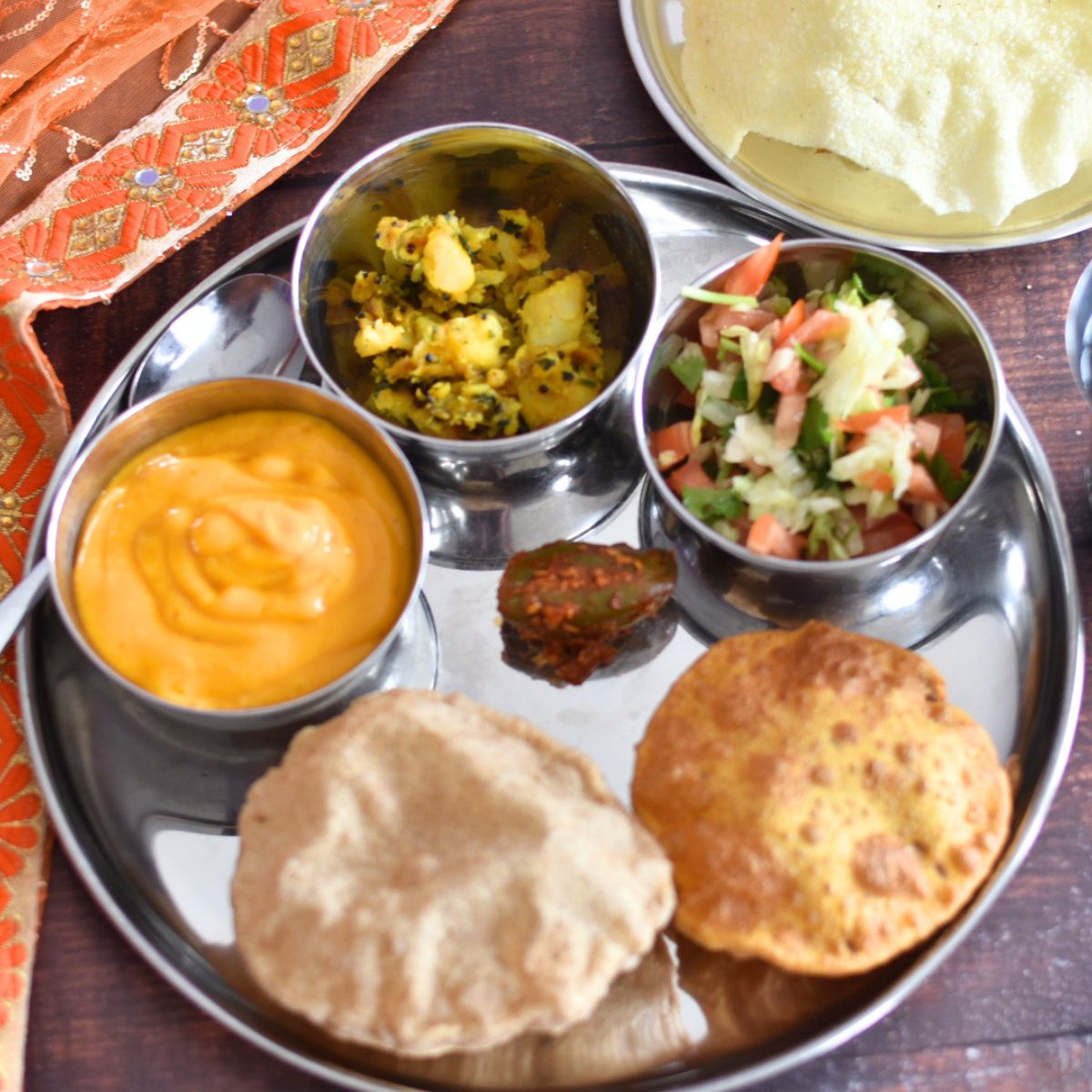
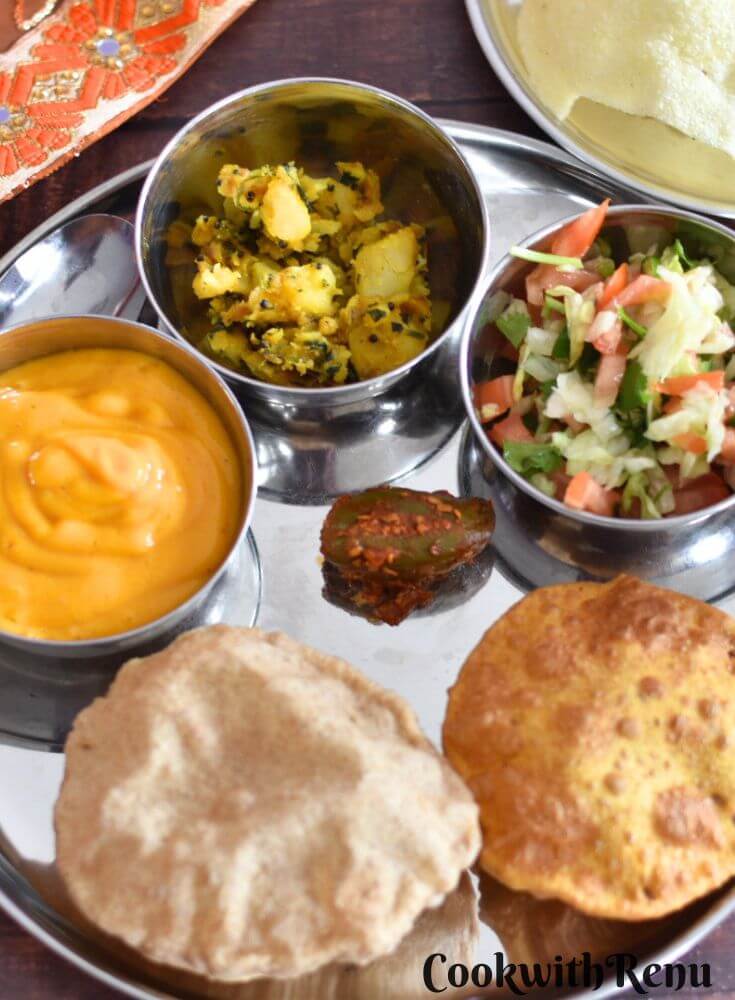
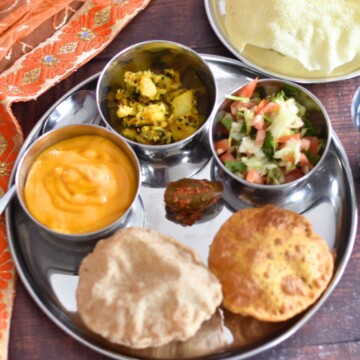
When everything is ready, plate the thali with a bowl of chilled aamras, a portion of aloo sabzi, a scoop of lettuce-tomato salad, and both kinds of pooris. The mix works because each part does a different job. The aamras is sweet and cool, the sabzi is warm and savory, the salad adds crunch, and the pooris bring the meal together.
This is the kind of plate that looks festive without asking for complicated cooking. The plain wheat pooris keep things classic, while the besan missi pooris bring spice and depth. The potato sabzi stays quick, the salad stays fresh, and the aamras gives the whole meal its summer mood.
If you want a home lunch that feels a bit more special than usual, this is a strong choice. It also works well for weekends, family meals, and mango-season get-togethers when you want a balanced Maharashtrian-style thali that doesn't feel heavy to make.
A summer thali that feels bigger than the effort
The strongest takeaway in this meal is timing. Once you boil the potatoes first, rest the dough, chill the aamras early, and fry the pooris last, the whole thali falls into place.
Get the dough texture and oil heat right, and the rest becomes easy to manage. When good mangoes are in season, this aamras thali is one of the nicest ways to turn a regular lunch into something memorable.
Quick Aamras Thali Recipe in 1.5 Hours
 Print
Pin
Rate
SaveCook ModeShare Recipe
Print
Pin
Rate
SaveCook ModeShare RecipeIngredients
For the besan missi poori dough
- 1 cup wheat flour
- ¼ cup besan
- Whole cumin seeds
- Red chili powder
- Turmeric
- Salt
- A little oil
- Water added gradually
For the plain wheat poori dough
- Wheat flour
- Salt
- Whole cumin seeds
- A little oil
- Water added gradually
For the Aamras
- Hapus or Alphonso mangoes washed
- Sugar
- A pinch of salt
- Cardamom powder
- Milk
- For the aloo sabzi
- 2 boiled potatoes
- Oil
- Mustard seeds
- Green chili
- Curry leaves
- Turmeric
- Red chili powder
- Salt
- Chopped cilantro
For the Lettuce Tomato salad
- Green lettuce leaves
- 1 tomato finely chopped
- Green chili optional
- Salt
- Lemon juice
- Chopped cilantro
- Roasted peanuts
- Black pepper powder
Instructions
- Recipe for Sada Poori
- Recipe for Missi Puri
- Recipe for Aamras
Recipe for Aloo Bhaji
- In a pan/wok, add oil.
- Once it is warm, add mustard seeds and curry leaves and let it splutter.
- Now add red chili powder and turmeric powder.
- Mix and add roughtly chopped potatoes.
- Add Salt and mix everything.
- Cook it on slow stirring in between.
- The bhaji would be done in 5-6 minutes.
Making of Lettuce - Tomato Salad
- Wash the lettuce and pat dry.
- Cut into thin strips.
- Cut the tomato finely.
- Add the lettuce, tomato, lemon, salt, black pepper powder, roasted peanuts in a bowl and mix.
- Cover and keep aside.
Preparing The thali.
- Boil the potatoes first.
- Knead the dough for the puris and let it rest.
- Now make the aaamras and refrigerate it if you love it a bit cold.
- Now the potatoes would be done, so make the potato bhaji.
- While the potatoes are cooking, make the lettuce tomato salad.
- Once the potatoes and salad is done, start making puris.
- Roll the puris. Try to make one or two batch of puri , while the oil is getting warm.
- Fry the puris. And yes you are done.
Video
Notes
Tried this recipe? Please comment and rate the recipe. Share your pics and tag us.
Subscribe to my email list to get the new recipes straight into your mailbox.
Join our Whatsapp Community to get direct recipe links. Join here.