Almond Flour Barfi Recipe Without Chashni
A dry, crumbly barfi mixture can feel frustrating, especially when it refuses to hold its shape. This almond flour barfi uses a simple sugar-and-water base, so you don't need to judge a tricky chashni, or sugar syrup, consistency.
It's a favorite for Diwali, weddings, and gift boxes because it looks elegant without requiring complicated shaping. Plan for about 20 minutes of prep, 15 minutes of cooking, and 18 to 20 diamond-shaped pieces. The key is cooking the almond mixture only until it gathers into a soft dough.
With slow cooking, gradual ghee additions, and a small amount of milk only when needed, you can make smooth badam barfi that slices neatly and looks like mithai-shop sweets.
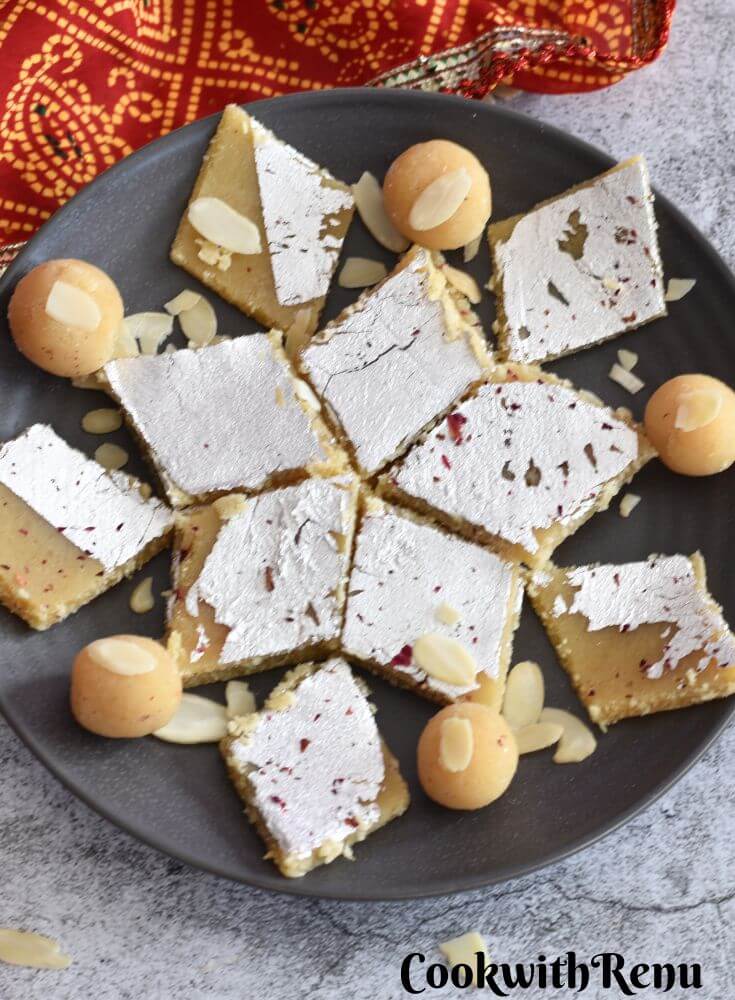
Badam Katli, Almond Burfi: What Makes This Indian Sweet Special
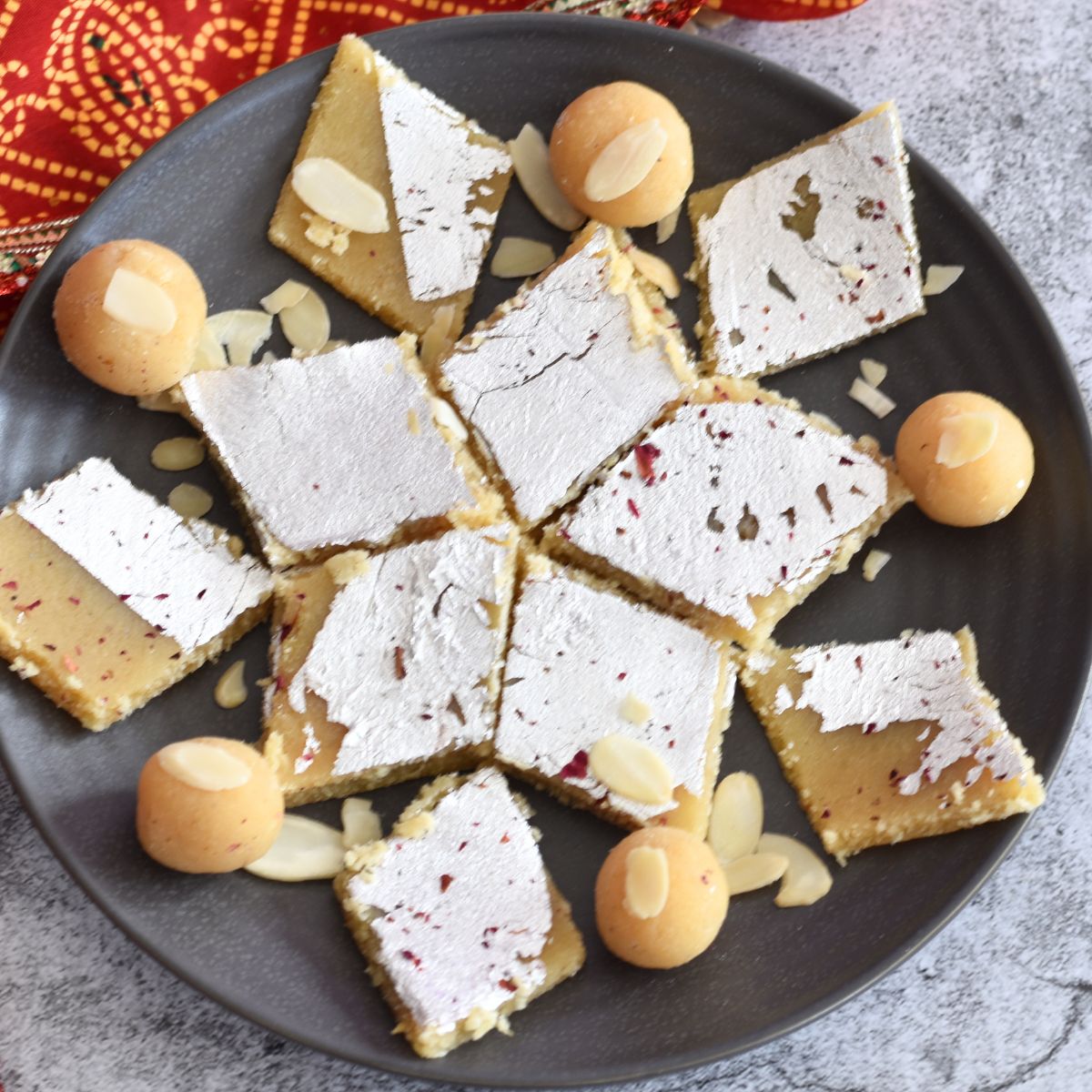
Badam katli and almond burfi usually describe the same almond-based confection. "Katli" often refers to the thin diamond cut, while "burfi" can also describe thicker, softer squares.
The ideal piece is smooth, thin, lightly chewy, and tender enough to melt as you eat it. It should taste clearly of almonds rather than sugar. A small amount of ghee gives richness, although coconut oil or a mild neutral fat can make the recipe dairy-free.
Why this badam barfi comes together so well
This recipe starts with almond flour and skips the usual step of cooking sugar syrup to a particular thread consistency. Instead, dissolve sugar in water, let it boil briefly, then stir in the almond flour.
The method also accounts for a common problem: a mixture that stays dry after the sugar mixture and ghee have been added. Rather than cooking it longer, which can dry it further, add milk a little at a time until it comes together.
The almond flour mixture may look dry and scattered at first. Keep stirring over low to medium heat before deciding it needs milk.
The finished barfi has a light nutty flavor, gentle saffron color, and a fragrant touch of cardamom. Dress it up with silver leaf and rose petals for Raksha Bandhan, Diwali, Navratri fasting occasions, Sawan celebrations, or a homemade gift box.
Ingredients for almond flour barfi
Gather everything before heating the pan, because the almond flour needs to go in gradually while you stir.
- 1 cup sugar, brown Demerara sugar or regular white sugar
- ½ cup water
- A pinch of saffron strands, optional
- 1 cup almond flour
- 5 tablespoons ghee, divided
- Up to ¼ cup milk, only if needed
- Cardamom powder, amount to taste
- Edible silver leaf (vark), optional
- Crushed rose petals, optional
- Almonds, optional, for garnish
Milk is a repair ingredient, not a standard addition. If the mixture is already smooth, soft, and holding together, leave it out.
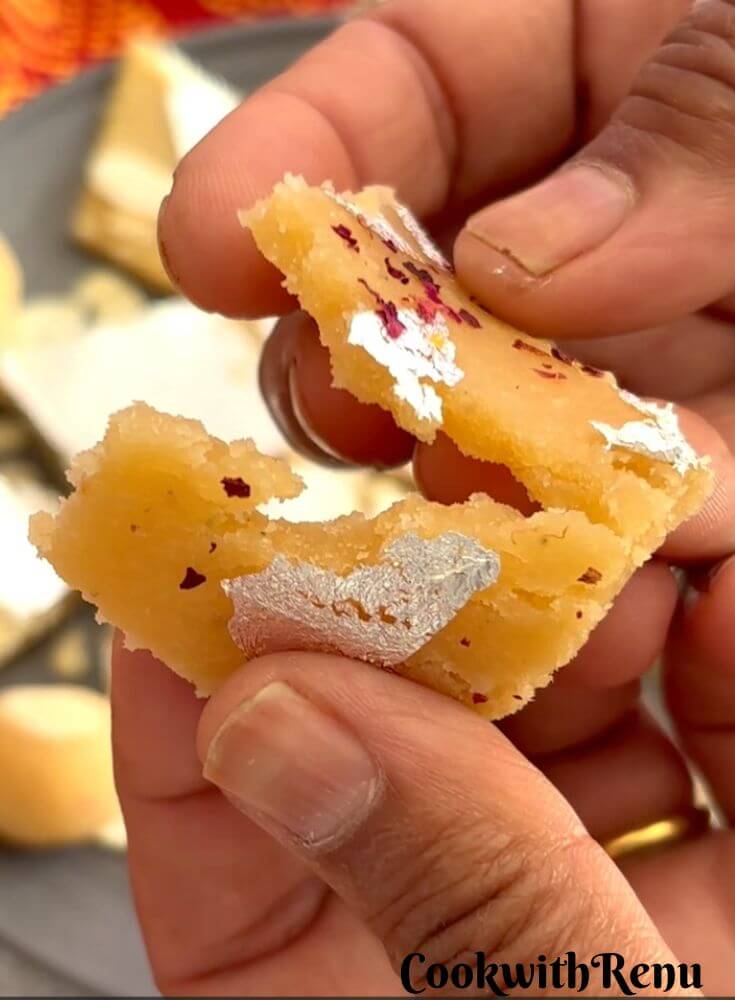
Start with sugar, water, and saffron
Dissolve the sugar without making chashni
Place a heavy-bottomed pan over the heat and add the sugar, water, and saffron strands. Brown Demerara sugar gives the barfi a warmer color, while white sugar also works well.
Saffron is often soaked before it goes into desserts. Here, you can add the strands directly to the pan. As the water warms, they release their color into the sugar mixture.
Stir once or twice, then bring the mixture to a boil. Let the sugar dissolve fully and continue boiling for about one more minute.
There is no need to test for one-string or two-string chashni in this recipe. Fully dissolved sugar and a brief boil are enough.
Add the almond flour slowly
Lower the heat if needed, then add almond flour gradually while stirring continuously. This prevents lumps and helps the flour absorb the sweet liquid evenly.
If your almond flour looks clumpy in the package, sift it before starting. At first, the mixture can look loose, dry, or broken apart. That appearance is normal at this point, so keep stirring instead of increasing the heat.
Cook the mixture gently and add ghee in stages
Almond flour needs patient cooking. Keep the heat low to medium, and scrape across the bottom and sides of the pan as you stir. High heat can make the mixture dry out before it has a chance to become smooth.
Add small amounts of ghee
Start adding ghee a teaspoon or small spoonful at a time. Mix each addition into the almond flour mixture completely before adding more.
This gradual method gives you more control over the texture. Pouring in all the ghee at once can make it harder to tell whether the mixture is absorbing it properly.
The recipe uses 5 tablespoons of ghee in total. However, keep watching the mixture as you cook. If it turns quite smooth before the final additions, don't add extra ghee merely to reach a number.
Look for a soft, cohesive mass
As the ghee works into the almond flour, the mixture should begin to look less scattered and more unified. Keep moving it around the pan so no part catches or dries along the edges.
Avoid roasting almond flour over high heat. The goal is a soft mixture that holds together, not a dry, heavily cooked dough.
Fix dry or crumbly badam barfi mixture
Even with careful stirring, the mixture may stay dry after the ghee has been incorporated. You'll notice that it doesn't come together when pressed, or that it cracks and falls apart instead of forming a small ball.
Cooking it longer won't fix that issue. More heat can remove more moisture and make the barfi harder to roll.
Add milk only when the mixture needs it
Pour in milk a very small amount at a time, then mix thoroughly before deciding whether it needs more. The milk in this method can come straight from the refrigerator, but add it slowly so the warm mixture doesn't cool too quickly.
After each small addition, stir until the milk disappears into the mixture. Stop as soon as the barfi begins to gather into one mass.
Too much milk can leave the barfi overly soft, so don't add a large splash all at once. Also, once milk goes in, don't keep cooking the mixture for a long time over high heat.
Test whether it is ready
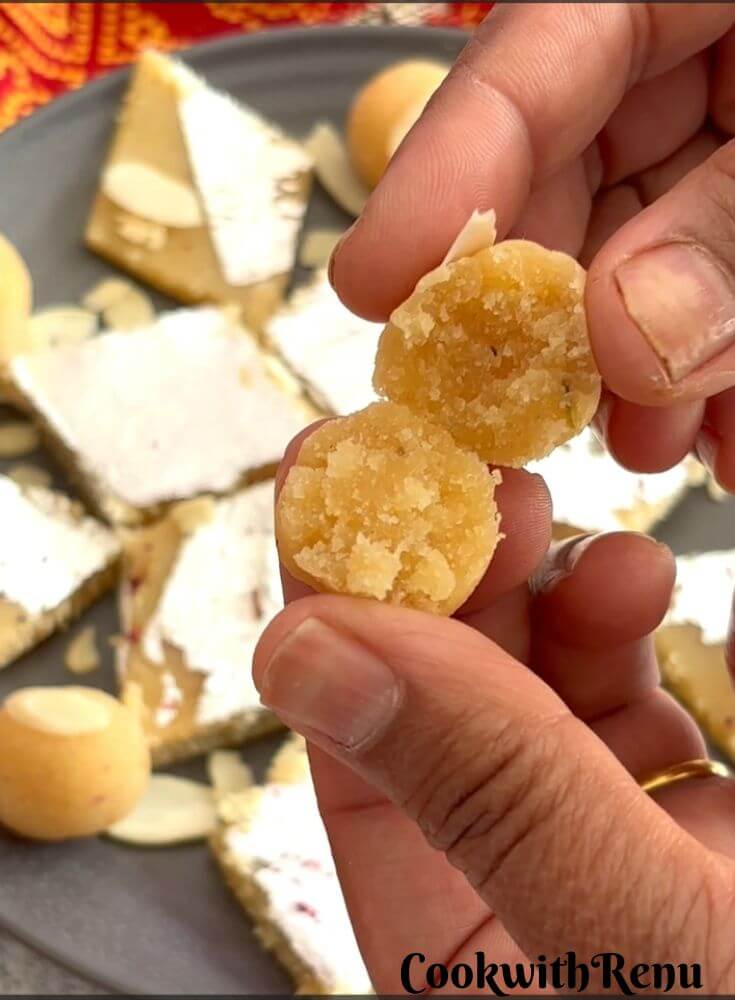
Take a small portion of the warm mixture and press it into a tiny bowl or ball shape. If it forms evenly and holds its shape without crumbling, it is ready.
Add cardamom powder at this stage and stir well so its aroma reaches the whole mixture. The cardamom addition is easy to miss while cooking, but it gives the barfi its familiar fragrant finish.
Stir in the final spoonful of ghee, then turn off the heat. Leave the mixture to cool for about five minutes. It should still be warm and pliable enough to handle.
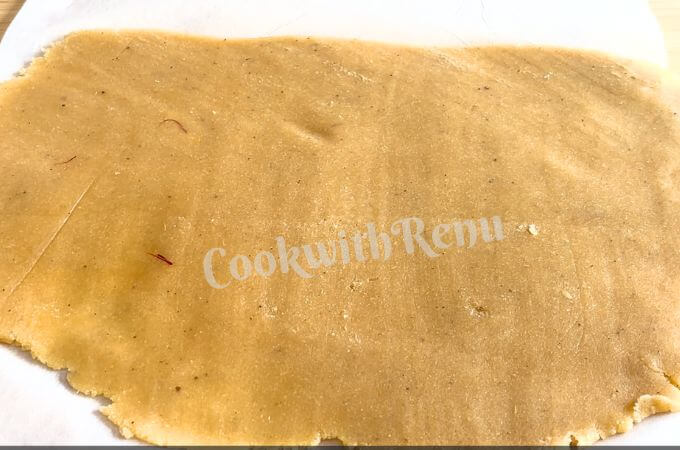
Roll the barfi into an even layer
Line a work surface with parchment paper. A lightly greased plate also works, but parchment paper makes it easier to move, turn, and straighten the barfi as you roll it.
Bring the warm mixture together gently with your hands, then cover it with another sheet of parchment paper. Roll over the top with a rolling pin until it forms a square or rectangle.
Aim for a layer around 2 to 3 mm thick, unless you prefer thicker pieces. Most importantly, keep the thickness as even as possible. Thin edges cool differently and can make some pieces feel softer or more fragile than others.
Use the rolling pin to neaten the outer edges. Turn the parchment as needed, then roll gently over any uneven spots until the layer looks consistent.
Decorate and cut neat barfi pieces
Edible silver leaf, or vark, gives the barfi a festive finish. It can be delicate to handle, so place it gently over the rolled mixture. Crushed rose petals add color, while thin almond pieces make a simple alternative garnish.
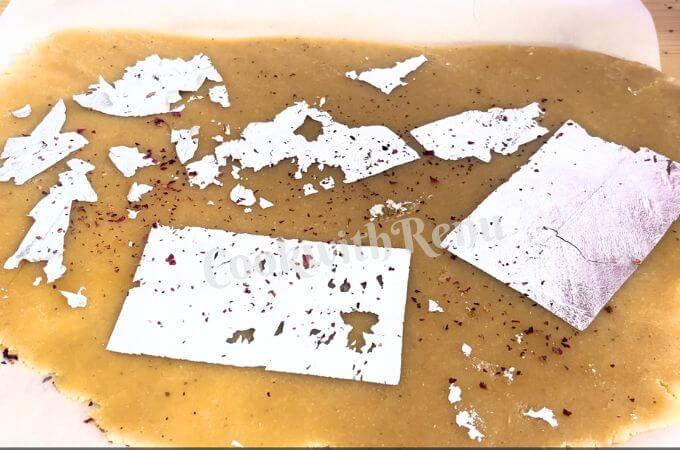
Cut while the mixture is slightly warm
Use a clean, dry ruler to mark even portions before cutting. Equal-sized squares or diamonds look polished on a serving plate and make the barfi easier to pack as gifts.
The barfi will still feel soft while warm, so cut with a gentle hand. Then leave it undisturbed until completely cool.
Once it has cooled, each piece should lift easily and hold its shape. The inside should look smooth rather than grainy or crumbly.
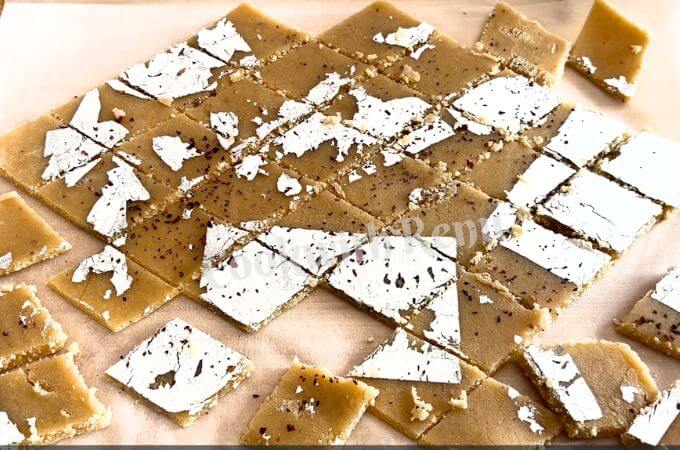
Turn the trimmings into ladoos
Don't discard the side trimmings left after you straighten and cut the barfi. Gather them together, roll them into small ladoos, and top each with an almond if you like.
This gives you a second way to serve the same batch, with no waste from the uneven edges.
Storage and serving tips
Because this recipe may include milk, store the finished barfi in the refrigerator. Keep it chilled until you plan to serve it.
Take the barfi out ahead of time and let it sit until it is closer to room temperature. Cold barfi can taste muted and firmer than intended, while a rested piece has a softer texture and a clearer almond-and-cardamom flavor.
Although almond flour is the base, this is still a sugar-and-ghee sweet. Enjoy it in balanced portions. For ingredient nutrition details, the USDA FoodData Central nut database includes entries for almonds and other nuts.
Serve it for festivals or share it as a gift
Arrange matching pieces in a small box or on a festive tray for Raksha Bandhan, Diwali, Navratri, Sawan fasting occasions, and family celebrations. Silver leaf, rose petals, and almonds make the presentation feel special without changing the recipe itself.
If you like this recipe, you might like this Instant Chocolate Modak or Chocolate Ladoo recipe, another easy festive sweet to try.
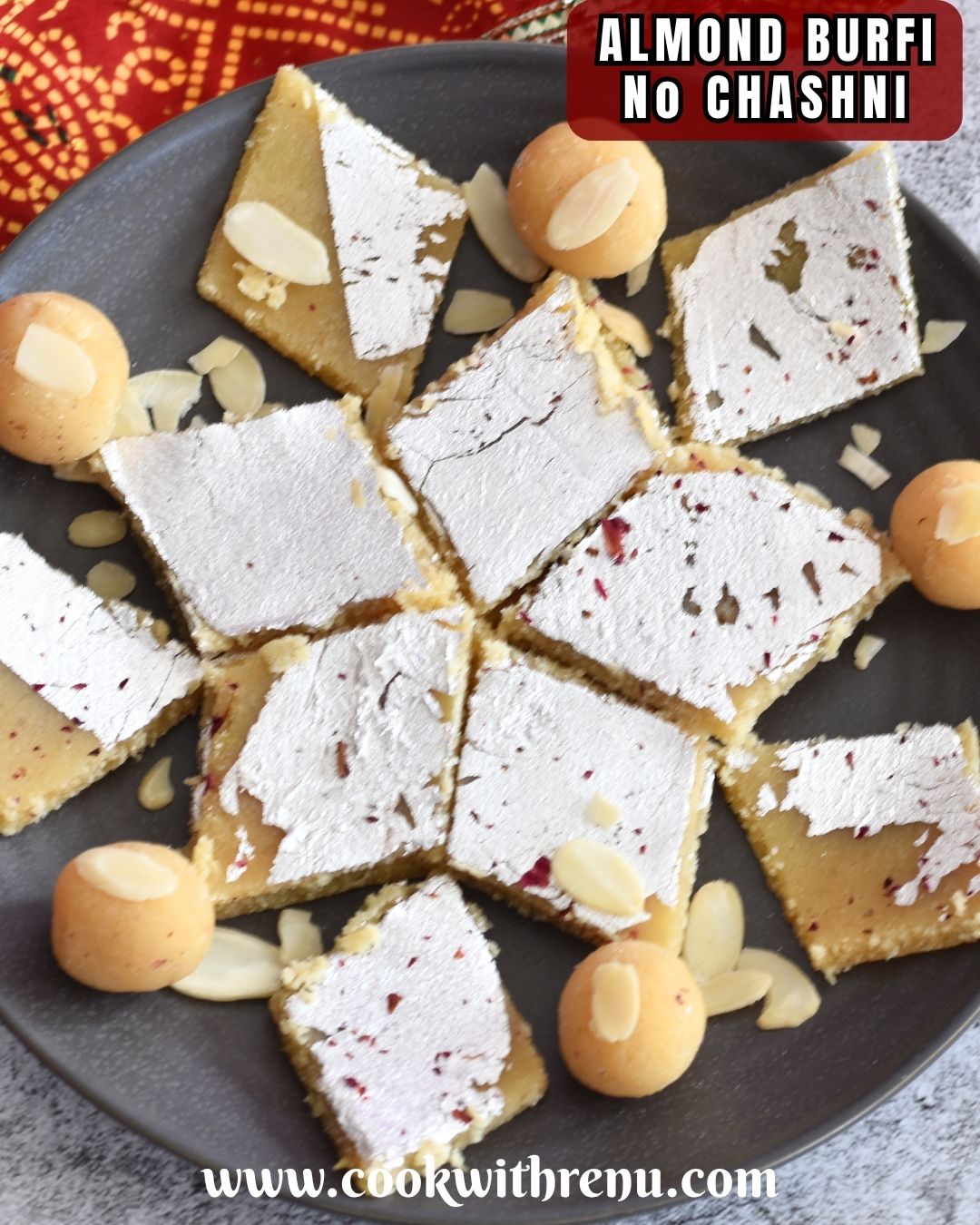
Almond Flour Barfi Without Chashni
 Print
Pin
Rate
SaveCook ModeShare Recipe
Print
Pin
Rate
SaveCook ModeShare RecipeIngredients
- 1 cup sugar brown Demerara sugar or regular white sugar
- ½ cup water
- A pinch of saffron strands optional
- 1 cup almond flour
- 5 tablespoons ghee divided
- ¼ cup milk only if needed
- 1 teaspoon Cardamom powder to taste
- Edible silver leaf vark, optional
- Crushed rose petals optional
- Sliced or chopped almonds optional
Instructions
Prepare the sugar mixture.
- Add sugar, water, and saffron to a heavy-bottomed pan.
- Heat until the sugar dissolves fully.
- Bring it to a boil and cook for 1 more minute.
- Do not test for chashni consistency.
Add the almond flour.
- Lower the heat to low or medium.
- Add almond flour gradually while stirring continuously, so it does not form lumps.
Cook gently.
- Keep stirring and scrape the bottom and sides of the pan.
- The mixture may look dry or crumbly at first. Do not increase the heat.
Add ghee slowly.
- Add ghee a little at a time, mixing well after each addition.
- Continue until the mixture becomes soft and starts to come together.
Adjust with milk if needed.
- If the mixture still feels dry and does not hold together when pressed, add milk a little at a time.
- Stir well after each addition.
- Stop as soon as the mixture forms a soft, cohesive mass.
Finish the mixture.
- Test a small portion by pressing it into a ball. If it holds its shape without cracking, add cardamom powder and stir.
- Mix in the final spoonful of ghee, then turn off the heat.
- Let the mixture rest for about 5 minutes.
Roll the barfi.
- Place the warm mixture between two sheets of parchment paper.
- Roll it into an even square or rectangle, about 2 to 3 mm thick.
Decorate and cut.
- Add silver leaf, rose petals, or almonds if using. Cut into squares or diamonds while the barfi is still slightly warm.
Cool and serve.
- Let the barfi cool completely before lifting the pieces.
- Store in the refrigerator, especially if you used milk.
Video
Notes
Do not cook the mixture for too long after adding milk, as it can become dry again.
Gather any trimmings and roll them into small ladoos for a no-waste treat.
Let chilled barfi sit at room temperature for a few minutes before serving for the best texture and flavor.
Tried this recipe? Please comment and rate the recipe. Share your pics and tag us.
Subscribe to my email list to get the new recipes straight into your mailbox.
Join our Whatsapp Community to get direct recipe links. Join here.