
No Oil Tomato Chutney from Nagaland
A bold chutney doesn't need oil to make a mark. This no-oil tomato chutney from Nagaland proves that a few fresh ingredients can turn into something fiery, bright, and full of character.
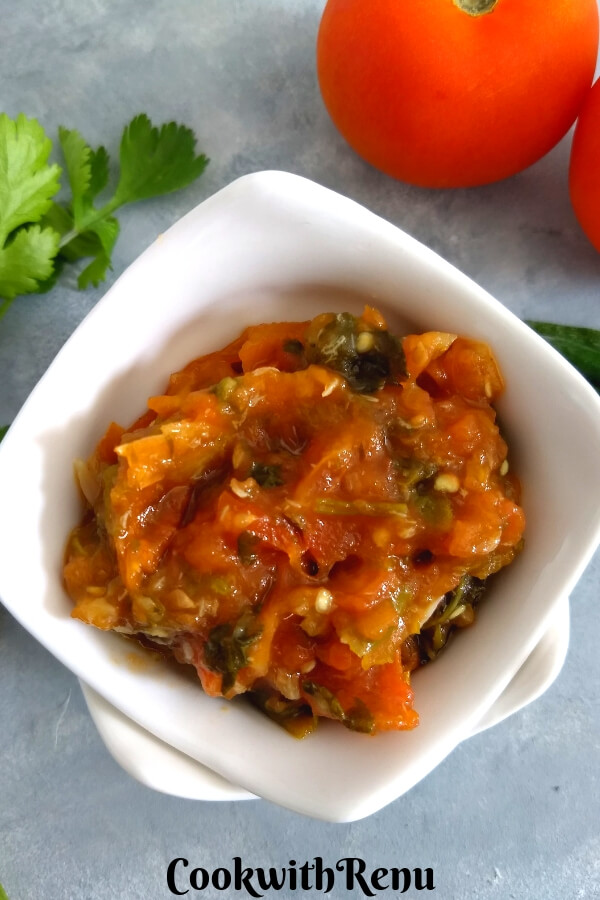
You cook everything fast, reduce the water, then crush it into a coarse, rustic mix. The result tastes sharp from tomatoes, hot from green chilies, and fresh from herbs. It's simple enough for a weekday meal, yet it wakes up the whole plate.
That mix of ease and flavor is what makes this chutney so memorable, so it's worth looking at what sets it apart.
Jump to:
- What makes this Nagaland tomato chutney different from regular tomato chutney
- A quick look at Nagaland and its bold food culture
- Why an oil-free chutney still tastes rich and satisfying
- The simple ingredients that build fresh, spicy flavor
- How to make no-oil tomato chutney step by step
- Best ways to serve, store, and adjust this chutney at home
- What to eat with Nagaland tomato chutney
- Easy ways to change the heat and herb balance
- How long it keeps and how to store leftovers
- No Oil Tomato Chutney from Nagaland
What makes this Nagaland tomato chutney different from regular tomato chutney
Many tomato chutneys in Indian kitchens start with oil. The ingredients are sauteed, sometimes tempered, and often cooked until soft and mellow. This Nagaland-style version takes a different path. It cooks in water, not oil, and keeps a rougher texture.
That change matters. Without oil, the tomato stays lively and tart. The chilies feel cleaner and sharper. Ginger, garlic, coriander, and mint don't sink into heaviness. Instead, they stay vivid, almost like each ingredient still has a voice.
The chutney is also less fussy. You don't need a tempering step or long frying time. You add the ingredients to a pot, cook them down, then mash them. Because of that, the flavor feels home-style and honest.
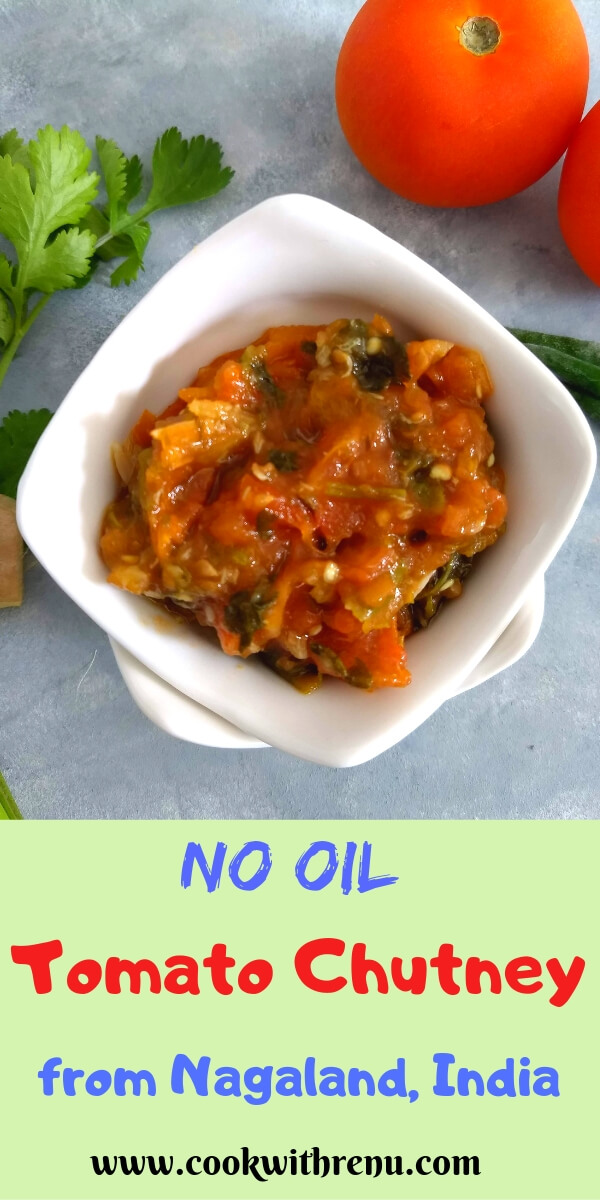
I was just drooling after I made this. Immediately after clicking a few pics, I applied this chutney as a spread on a bread slice and enjoyed it to the fullest. This Tomato chutney goes well as a side or as a spread to your rotis. I have taken the recipe from here.
A quick look at Nagaland and its bold food culture
Nagaland, in Northeast India, is known for food with strong identity and clear flavor. The state has many tribes and many food traditions, so there isn't one single "Naga" style that speaks for all kitchens. Still, a few ingredients often appear across the region.
Chilies are a big part of that story. So are ginger, garlic, herbs, smoked foods, and fermented ingredients in some dishes. These flavors can be intense, but they aren't random. They work together in ways that feel direct and balanced.
This chutney fits that spirit. It doesn't hide behind butter or cream. It tastes fresh, hot, and grounded.
Why an oil-free chutney still tastes rich and satisfying
Oil adds body, but it isn't the only way to build flavor. Here, the depth comes from reduction. As the tomatoes break down and the water cooks off, the taste gets tighter and stronger. Garlic softens. Ginger warms up. Chilies spread through the whole pot.
Then comes the crushing. When you mash the cooked mix, the juices, pulp, and aromatics blend into one spoonable chutney. Because it stays coarse, it feels more satisfying than a thin sauce.
The trick is simple: cook until the water nearly disappears, then mash while the mixture is still soft.
That rustic finish is part of the appeal. You taste little bursts of tomato, chili, and herb instead of one smooth, flat puree.
The simple ingredients that build fresh, spicy flavor
This chutney works because every ingredient has a clear job. There are no extras and no filler. Each one pushes the flavor in a useful direction, so even a small bowl tastes lively.
Use ripe tomatoes if you can. They bring better sweetness and body. Fresh herbs matter too, because this chutney depends on brightness as much as heat. If one herb is missing, you can still make it, but the final taste will shift.
Tomatoes, green chilies, ginger, and garlic
Tomatoes are the base. They give the chutney moisture, tang, and soft pulp once cooked. If your tomatoes are a little sweet, the chutney feels rounder. If they are more acidic, the chutney tastes sharper and punchier.
Green chilies bring the main heat. Their flavor is fresher than dried chili powder, and that suits this style well. You can cut back if you want a milder chutney. You can also choose less hot chilies and still keep the green, crisp edge.
Ginger adds warmth rather than burn. It lifts the tomatoes and keeps the chutney from tasting flat. Garlic does another job. It gives depth and a savory backbone, which becomes more noticeable after cooking.
Together, these four ingredients do most of the heavy lifting. If you change the chili level, the chutney still works. If you reduce the tomato too much, though, the balance can tip, and the mix may feel harsh.
How coriander, mint, water, and salt shape the final taste
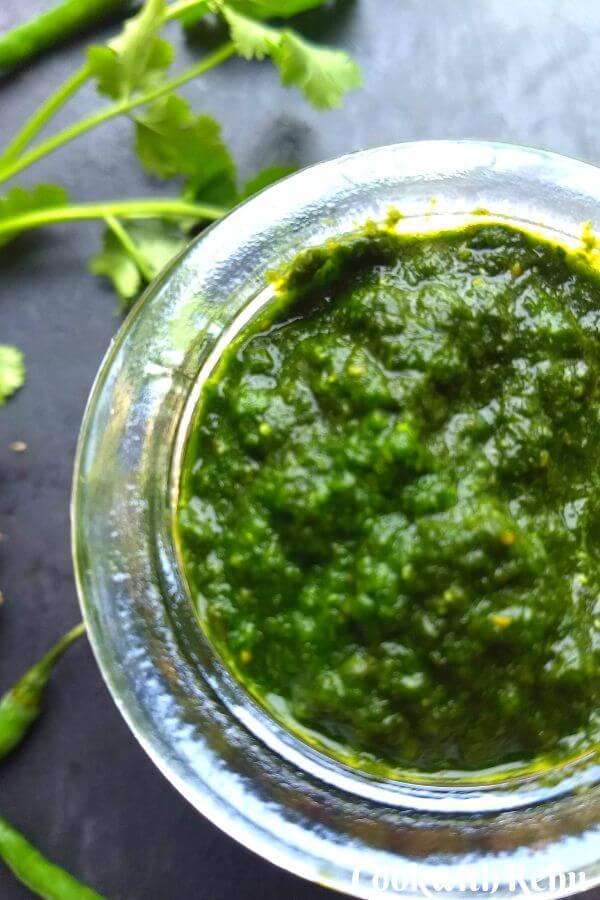
Coriander leaves add a green, citrus-like freshness. Mint brings a cooler, sharper note that cuts through the heat. Used in the right amount, mint makes the chutney feel lighter. Used too much, it can take over. If you want a more tomato-forward chutney, reduce the mint and lean more on coriander. And this combination always works like in this Green Coriander Mint Chutney without onion and garlic.
Water has a quiet but important role. It helps everything soften without frying. That means the ingredients cook evenly and release their juices at the same pace. You're not trying to boil the mix into soup. You only need enough water to help the tomatoes, chilies, garlic, and ginger cook down.
Salt ties the whole thing together. It sharpens the tomato, wakes up the herbs, and keeps the heat from tasting one-note. Add it with care, then taste again after cooking, because reduced chutney often tastes saltier than it did at the start.
How to make no-oil tomato chutney step by step
The method is short, and that's part of the beauty. You don't need special tools, and you don't need to stand over the stove for long. What matters most is how far you reduce the mixture and how much texture you keep at the end.
Cook everything together until the water almost dries
Add the chopped tomatoes, green chilies, ginger, garlic, coriander, mint, water, and salt to a pot or kadai. Set it over medium heat and cook with a few stirs now and then.
At first, the tomatoes will release more liquid. After that, the mixture starts to soften and shrink. Keep cooking until the garlic and ginger lose their raw edge and the water is mostly gone. You want moisture left in the pulp, but not a watery pool at the bottom.
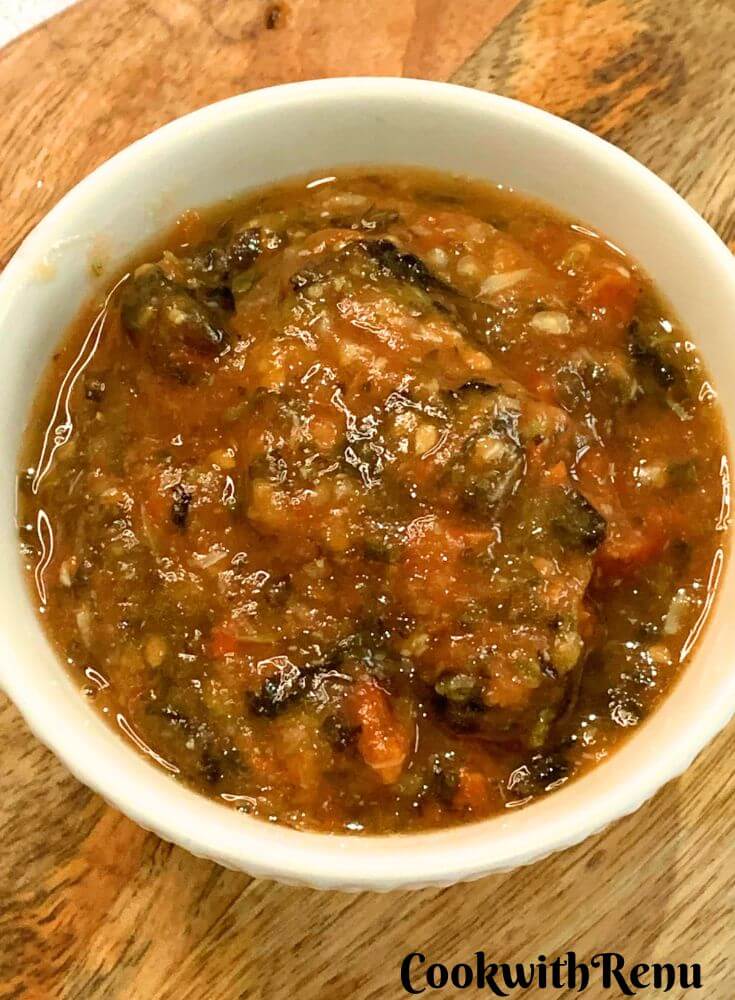
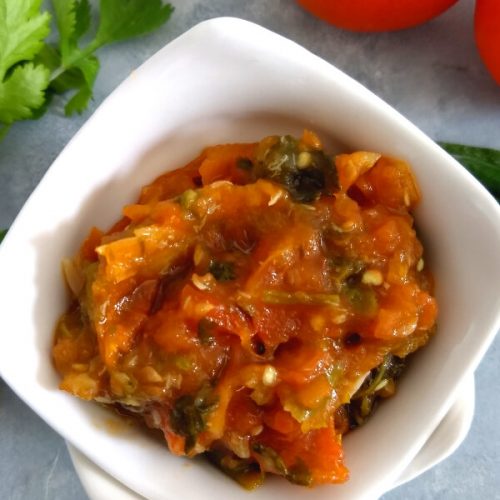
When I first made the chutney, I made it a bit thick, but after that, I like to keep it a bit on the liquid side, but not too much. As you can see in the pic above.
Don't chase color here. Browning isn't the goal. This chutney tastes best when it stays bright and fresh.
Crush the mixture for a rustic chutney texture
Once the ingredients are fully soft, take the pot off the heat. Then mash the mixture with the back of a spoon, a potato masher, or a mortar and pestle. The idea is to break everything down enough to hold together while keeping some bite.
A smooth puree changes the whole mood of the chutney. It can feel too uniform and lose the rough charm that makes this version special. A coarse crush gives you pockets of tomato and flecks of herbs, which makes each spoonful more interesting.
If the chutney looks too wet after mashing, return it to low heat for a minute or two. If it looks too dry, stir in a small spoon of water.
Common mistakes to avoid while cooking
A few small errors can throw off the final texture. The most common one is using too much water. That stretches the cooking time and can mute the flavor. Start small, because tomatoes release their own juices.
Burning is another issue. Once the water reduces, the mixture can catch fast. Stir more often near the end.
Undercooked garlic and ginger can also stand out in a bad way. They should taste mellow, not raw. Finally, avoid over-blending. This chutney should look handmade, not like a bottled sauce.
Best ways to serve, store, and adjust this chutney at home
A good chutney can rescue a plain meal, and this one does that with ease. Because it is sharp, spicy, and herb-led, a little goes a long way. It works best next to simple food that gives it room to shine.

What to eat with Nagaland tomato chutney
This chutney is excellent with dal and rice. The mildness of the meal makes the chutney pop. It also works with roti or paratha, where it acts almost like a spicy relish.
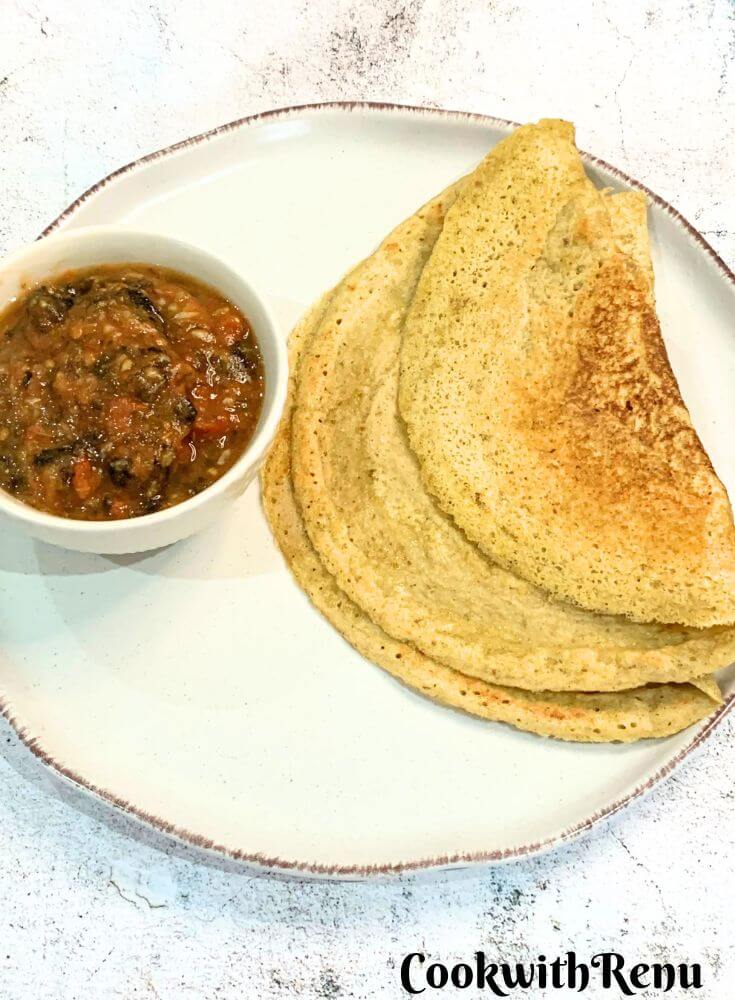
I like to spread it on my toast, tuck it into a sandwich, or spoon it next to grilled vegetables. It goes best with chila, like here I am enjoying this with Red Lentil and Quinoa Chila. It lifts plain potatoes, roasted paneer, and simple lentils. Even a small dab on the side of a lunch plate changes the whole bite.
Because the texture is thick and coarse, it also works as a spread better than many runny chutneys do.
Easy ways to change the heat and herb balance
The easiest change is the chili level. Use fewer chilies if you want gentler heat. If you still want flavor without the burn, pick milder green chilies rather than removing them fully.
For a softer, less sharp chutney, add an extra tomato. That gives more body and tones down the garlic and ginger. If mint feels too strong for your taste, reduce it and let coriander take the lead.
These are small changes, but they keep the chutney close to its original style. The best version still feels bright, spicy, and rustic.
How long it keeps and how to store leftovers
Let the chutney cool fully before you store it. Then transfer it to a clean, airtight container and keep it in the fridge. Because it is a fresh chutney with no oil, it is best eaten within a few days while the flavor is still lively.
Use a clean spoon each time, and keep the lid closed well. If the chutney thickens in the fridge, stir it before serving. You can also let it sit at room temperature for a short time so the flavor opens back up.
The Secret Ingredients & The challenge
I have shared this earlier with our group Shhh Cooking secretely where the theme was cooking from different months.
The month challenge for Apr-2019, was the state of Nagaland. I was paired with Aruna SarasChandra from Vasusvegkitchen. Do check her blog for some delicious and healthy recipes.
So, Aruna gave me Red chilly and Tomato as the secret Ingredient. I requested her to change it to green as I could not get the Red ones. I prepared this No Oil Tomato Chutney from Nagaland. I gave her Tamarind and Red chilly and she created this delicious Nagaland Pumpkin Oambal.
No Oil Tomato Chutney from Nagaland
 Print
Pin
Rate
SaveCook ModeShare Recipe
Print
Pin
Rate
SaveCook ModeShare RecipeIngredients
- 3 medium Tomatoes chopped into 4 pieces
- 3-4 Green chillies slit, can adjust as per taste
- 4-5 Garlic pods
- 2 inch Ginger roughly chopped
- ½ Cup Coriander sprigs
- ½ Cup Mint
- 1 ½ cup water
- Salt
Instructions
- In a kadai or a pot add the water, salt and all the ingredients.3 medium Tomatoes, 3-4 Green chillies, 4-5 Garlic pods, 2 inch Ginger, ½ Cup Mint, 1 ½ cup water, Salt, ½ Cup Coriander
- Cook this mixture on medium stirring in between.
- Cook this until all the water is almost dried up.
- Do not let the mixture burn.
- Once done, smash it well with the back of a spoon or with a motor and pestle.
- Serve as a spread or as a side to Dal and Rice.
Notes
Updates
This post was first published on my blog on 30th April 2019. Today the 24th April 2026, I am updating it with more content and few more pics. Recipe and old pics remain the same.
Sharing this with
Earlier, I shared this with our

Today I am sharing this #Foodies_RedoingOldPost_175

Tried this recipe? Please comment and rate the recipe. Share your pics and tag us.
Subscribe to my email list to get the new recipes straight into your mailbox.
Join our Whatsapp Community to get direct recipe links. Join here.

Indian Cooking Confidence Guide
Learn the basics. Build confidence. Enjoy simple Indian cooking.

Fabulous preparation Renu, Tomato chutney looking very colorful and tempting.
Thank You
I love spicy Chutneys especially with garlic.. your no-oil version sounds super tempting and spicy too..
The chutney looks amazing... all you would need is some stuffed paratha to dip into it... yum!
Love the colour of the chutney. A lovely tangy and slightly hot chutney, I made the same and loved it. I enjoyed it with some rice and as a spread for a sandwich of your chutney.
Thank you
This is indeed a tasty accompaniment to make and ingredients are easily available at home.
Love such spicy fuss free chutneys. This oil free version brings out the real flavors of all the ingredients.
Thank you
i am sure this recipe was loved quickly among the family. I am sure mine will and the ease of making it tempts me now to try it.
Thank You
Wow, tomato chutney without oil looks delicious. I love spicy chutneys a lot. Thanks for sharing the recipe.
Thank You
Tomato chutney looks so tempting and allowing it to boil will add lot of flavor to chutney.
Thank You
This Naga Tomato chili chutney looks perfect for a sandwich filling. I love these recipes that use simple processes and as a bonus, do not use oil or strong spice and yet taste delicious
Thank You
Hi can this be kept in the fridge, if so how long does it keep in an air tight container?
Hi, Yes you can keep this in the fridge for 4-5 days max. I have not kept it any longer. If you want you can freeze it in portions or icecubes and use as required. Thank You,
After your recipe, we have been making this oil free chutney often, it is a favorite in the family.