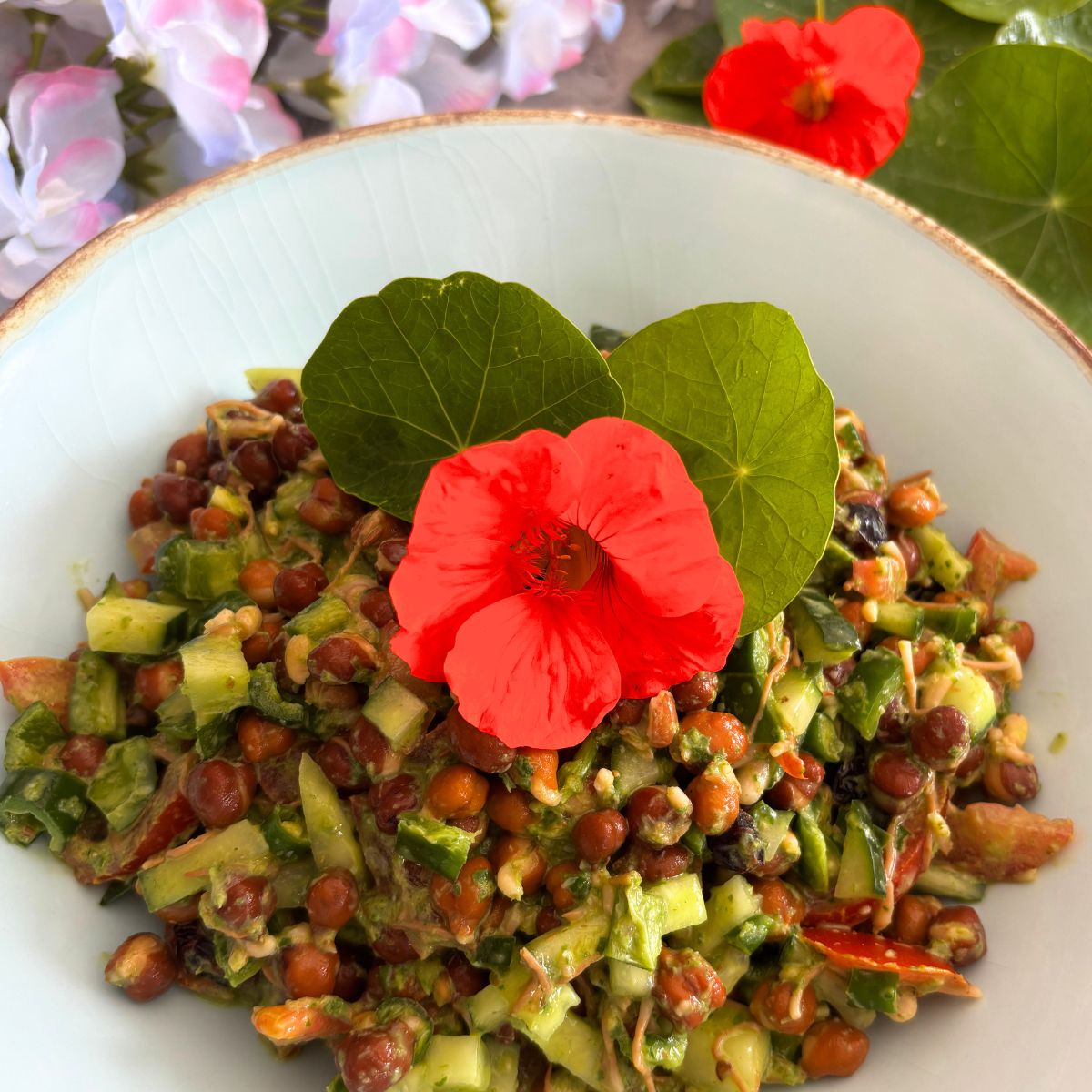
Sprouted Black Chana Salad With Nasturtium Yogurt Dressing
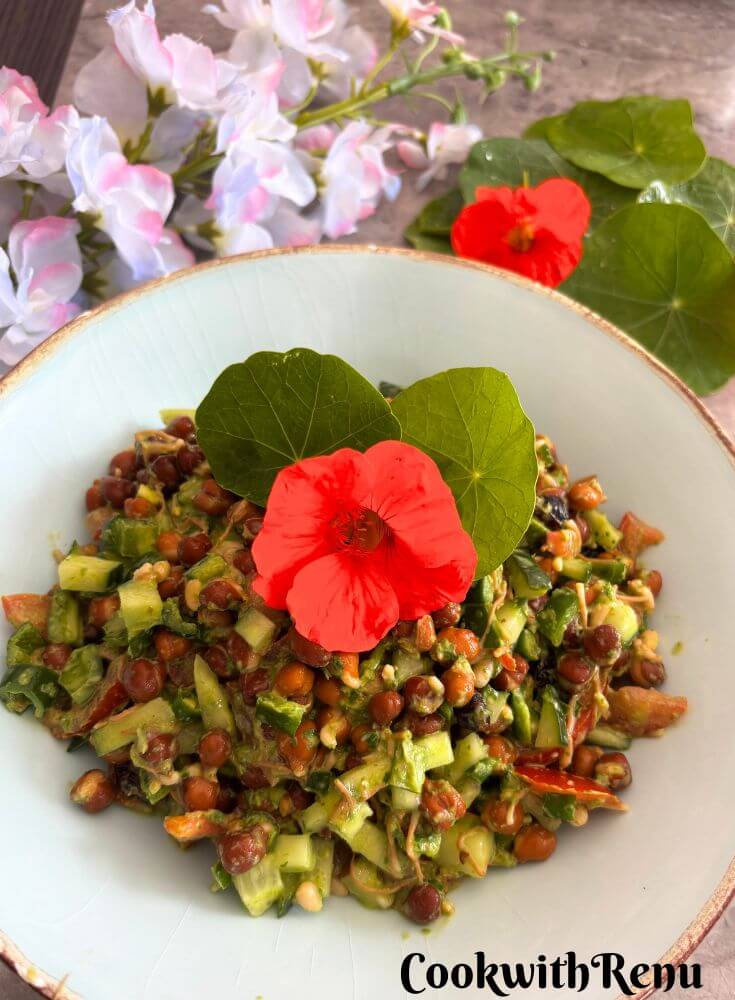
A handful of garden nasturtiums can give a familiar chickpea salad a fresh, peppery edge. This chana salad with nasturtium yogurt dressing uses one simple yogurt purée to bring together chickpeas, edible nasturtium leaves, and flowers in a colorful vegetarian dish.
The salad is a practical garden-to-table option when you have fresh nasturtiums that are safe to eat. The key is to taste the leaves first, prepare them carefully, and add the yogurt dressing only when the salad is ready to serve.
Start With Safe, Fresh Nasturtiums
Nasturtium leaves and flowers are edible and have a mild peppery flavor. That pepperiness can change from plant to plant. Season, weather, leaf size, and maturity all affect what you taste.
Both large and small leaves can work in this salad. However, young leaves usually have a gentler flavor than mature leaves. Take a small bite before making the yogurt purée, especially if you are picking from a new plant. A strong, peppery leaf may be enjoyable in small amounts, while a milder leaf can become a more noticeable part of the dressing.
Use nasturtiums grown for eating, or pick them only from an area free of pesticides, herbicides, roadside pollution, and animal waste. Correct identification matters too. A plant should not be eaten only because someone calls it a nasturtium, especially when it came from an ornamental nursery or an unfamiliar garden.
Garden plants treated with chemicals are not automatically safe to eat, even when the plant itself is edible.
The salad gets its character from fresh leaves and flowers, so avoid anything limp or damaged. Crisp green leaves bring the cleanest flavor and the most appealing texture.
Clean the leaves and flowers with care
The cleaning is very crucial in this recipe. Start by checking every leaf and flower before it reaches the bowl or blender.
- Choose leaves that look crisp and green.
- Remove tough ends from the stems, then keep only tender sections if you are using stems.
- Cut away yellow patches, insect damage, and wilted areas.
- Clean the leaves and flowers before blending them into the yogurt purée.
Handle the flowers gently so they keep their shape. While they are edible, their flavor can vary just as much as the leaves. A quick taste helps you decide how much peppery character you want in the finished salad.

Make the Nasturtium Yogurt Purée
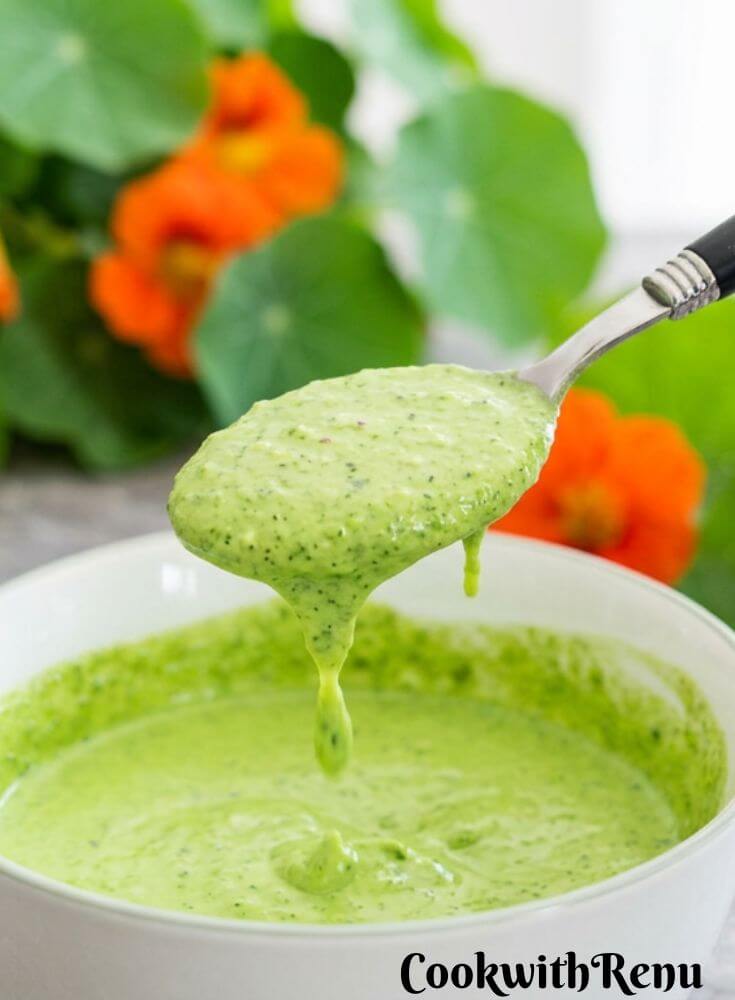
The dressing begins with the fresh nasturtium yogurt puree. This is the central preparation in the recipe. Instead of making a separate dressing only for the salad, you prepare a creamy yogurt mixture with the cleaned nasturtium leaves and flowers, then season it with spices.
That approach keeps the salad simple. Chickpeas provide the hearty base, while the yogurt puree carries the garden-fresh flavor through every bite. It also gives you a flexible preparation that can become a snack dip or raita when you are not in the mood for salad.
For the full ingredient list, quantities, and serving options, use nasturtium leaves, stems, raita, and yogurt dip recipe. It provides the complete method behind the yogurt mixture used in this salad.
Keep the flavor balanced
Nasturtiums have a naturally peppery bite, while yogurt brings a cool, creamy contrast. The spices in the puree help round out those two flavors. Because the strength of fresh nasturtiums varies, tasting before blending is more useful than assuming every leaf will taste alike.
Prepare the puree while the leaves and flowers still look fresh. Then set it aside while you prepare the chana salad. This keeps the work organized and makes the final assembly quick.
The same puree has three uses in the video:
| Use | How it is served |
|---|---|
| Yogurt dip | Serve with crackers, chips, or vegetable sticks. |
| Chana salad dressing | Toss it through the prepared chickpea salad. |
| Raita | Serve it as a simple, refreshing yogurt side. |
For this recipe, the puree becomes the dressing that ties the chana salad together.
Prepare the Chana Salad Before Dressing It
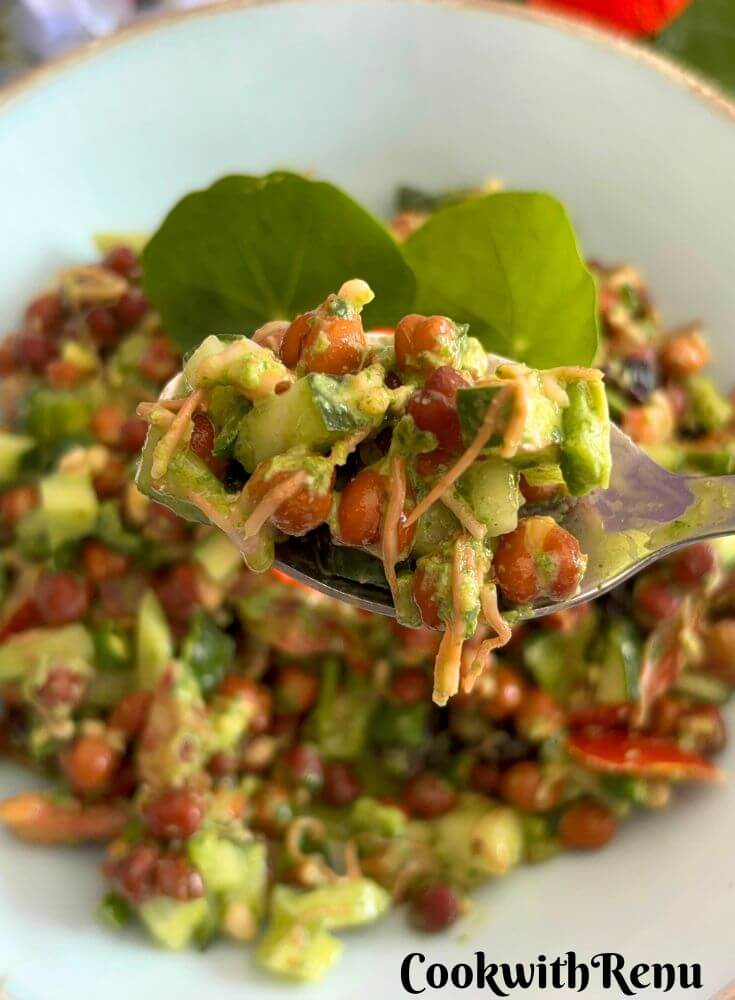
Chana, or chickpeas, gives the dish a substantial base, so the salad can work as a vegetarian meal or as a side dish. I am using sprouted black chana here instead of just soaked chana. I have boiled the sprouted black chana, as consuming it raw can lead to indigestion.
The most useful order is to prepare the chickpea salad first, then add the nasturtium yogurt purée at the end. That way, the dressing stays where it belongs, coating the salad rather than sitting at the bottom of the bowl.
Spoon the prepared nasturtium yogurt purée over the chana salad, then mix it through so the chickpeas are evenly coated.
A yogurt dressing changes the feel of a chickpea salad. It adds creaminess and carries the flavor of the leaves and flowers throughout the bowl. Rather than serving nasturtiums as a decoration alone, this method puts their peppery flavor directly into the salad.
Mix with a light hand. You want the salad coated with the purée, not overwhelmed by it. Since each plant can have a different level of pepperiness, this is also the point where tasting helps. The dressing should complement the chickpeas and other prepared salad ingredients.
A garden-to-table salad with a practical purpose
This salad is more than a way to use an extra handful of flowers. It gives fresh nasturtium leaves and flowers a clear role in a meal, while yogurt softens their peppery flavor.
Chickpeas make the dish filling, and the yogurt purée keeps it connected to the other recipes in the video. If you make a larger batch of the purée, you can serve some as a dip and use some as the salad dressing. That means one fresh preparation can cover more than one part of a meal.
I also make this Nasturtium Pesto or this Vegan Stuffed Nasturtium Leaves (Patra), a nice twist to the usual patra made using colassia leaves.
A Fresh Way to Serve Chickpeas
Chana salad with nasturtium yogurt dressing makes good use of an edible garden plant without adding unnecessary complexity. The chickpeas make the dish satisfying, while the yogurt purée adds creaminess and a distinct peppery note.
Freshness matters most. Choose clean, properly identified nasturtiums, taste the leaves before blending, and use the purée to coat the salad when it is ready to serve. One nasturtium yogurt purée can turn a bowl of chickpeas into a colorful garden-to-table meal.
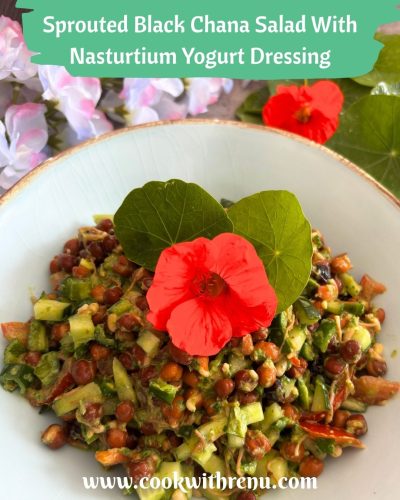
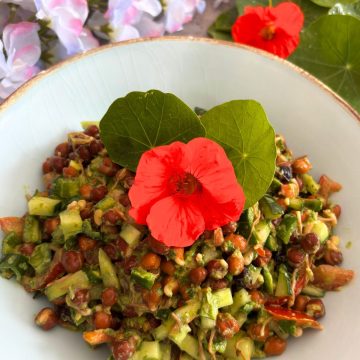
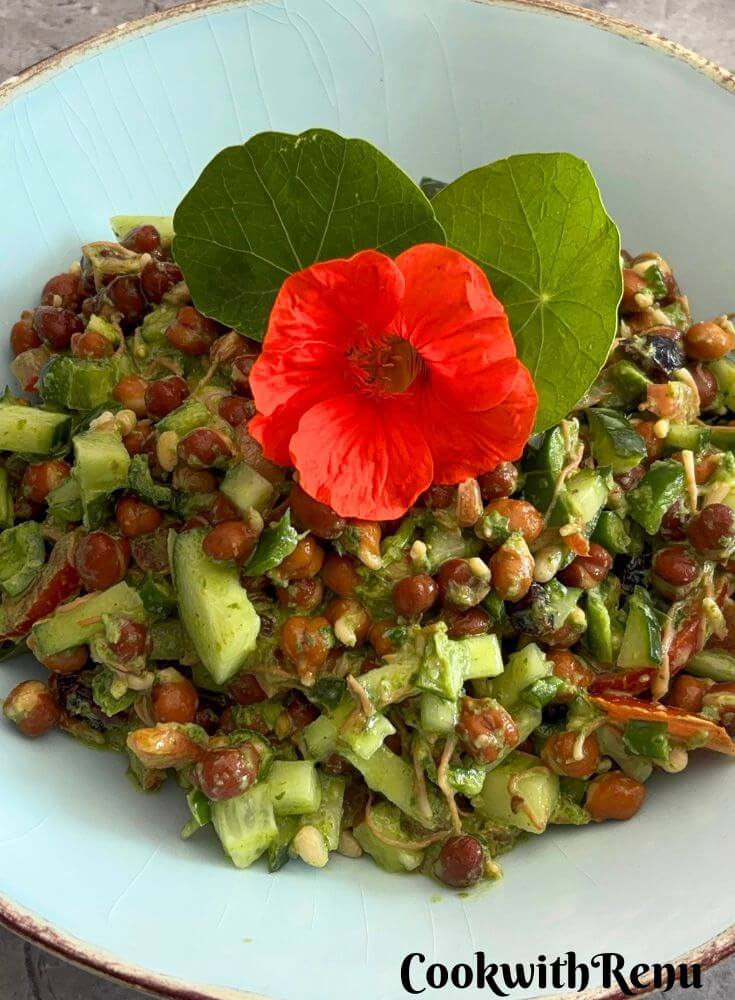
Sprouted Chana Salad With Nasturtium Yogurt Dressing
 Print
Pin
Rate
SaveCook ModeShare Recipe
Print
Pin
Rate
SaveCook ModeShare RecipeIngredients
- 1 Cup Sprouted and Boiled Black Chickpeas
- ¼ cup capsicum
- ¼ Cup Cucumber
- 1.4 cup tomato
- ¼ teaspoon roasted cumin powder
- 3-4 tablespoons Nasturtium yogurt dip
- Lemon/Lime juice to taste
- 1 teaspoon of dried cranberries or black currants
- 1 teaspoon of pine nuts
- Salt
Instructions
- In a large bowl, add boiled chickpeas
- Then add capsicum, cucumber, tomato, salt, and cumin powder.
- Now add 3-4 tablespoons of nasturtium yogurt dip.
- Add Lemon/Lime juice to taste and mix
- Lastly, add cranberries and pine nuts, and mix.
- Garnish with nasturtium leaves and flowers.
Video
Notes
- Measurements are a rough guide; one can adjust as per liking.
- Use nasturtiums grown for eating, or pick them only from an area free of pesticides, herbicides, roadside pollution, and animal waste. Correct identification matters too. A plant should not be eaten only because someone calls it a nasturtium, especially when it came from an ornamental nursery or an unfamiliar garden.
- Garden plants treated with chemicals are not automatically safe to eat, even when the plant itself is edible.
Tried this recipe? Please comment and rate the recipe. Share your pics and tag us.
Subscribe to my email list to get the new recipes straight into your mailbox.
Join our Whatsapp Community to get direct recipe links. Join here.

Indian Cooking Confidence Guide
Learn the basics. Build confidence. Enjoy simple Indian cooking.