Rajgira Paneer Paratha Vrat Thali
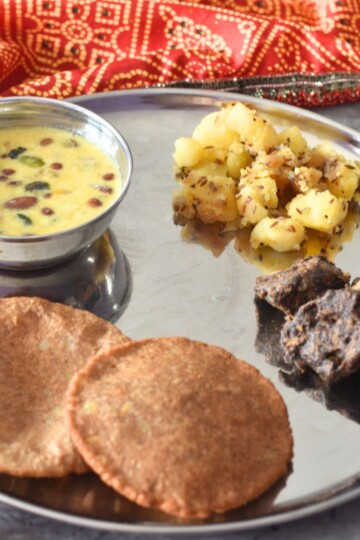
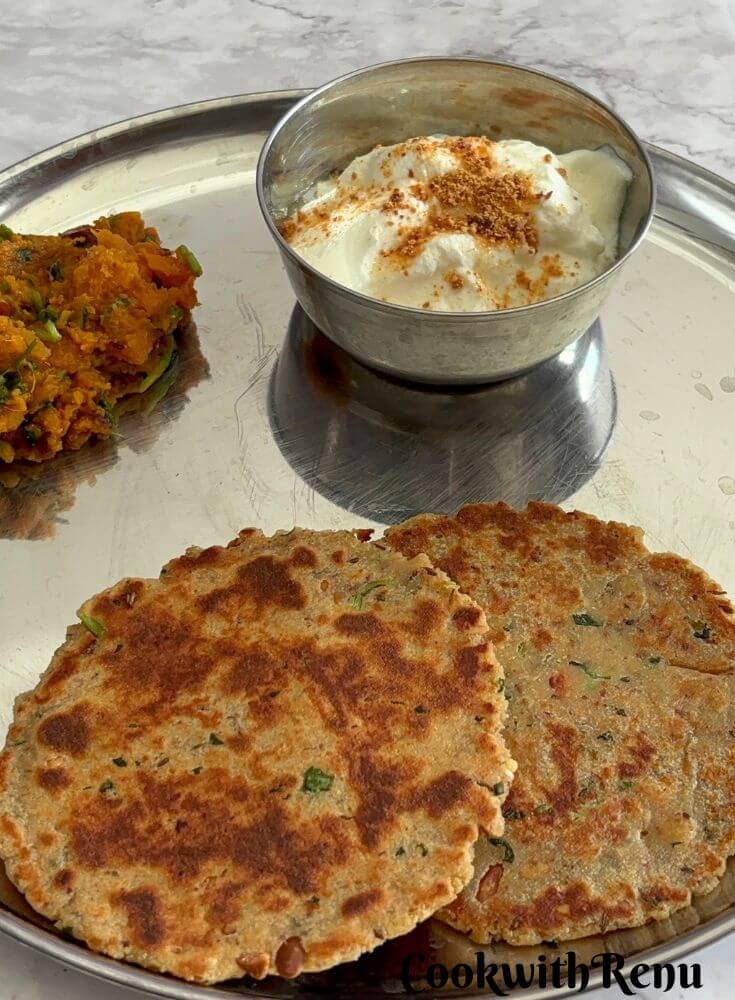
A fasting meal can still feel like a proper, satisfying plate of food. This vrat thali pairs soft rajgira paneer parathas with warm sweet potato sabzi and fresh curd, without using white potatoes.
The dough gets its body from grated paneer and roasted peanut powder, while a lightly damp muslin cloth makes the naturally delicate rajgira dough far easier to shape. It can be ready in about 30 minutes when the sweet potatoes are cooked ahead.

A Filling Vrat Thali for Any Fasting Day
This simple thali brings together ingredients commonly used for fasting meals: rajgira flour, paneer, roasted peanuts, sweet potato, ghee, cumin, green chili, and fresh coriander. The paratha has a tender texture because paneer adds moisture to the dough, while the sweet potato sabzi is lightly seasoned and finished with peanut powder.
Serve everything with fresh curd for a meal that works well for breakfast, lunch, or dinner. It is suitable for Sawan vrat, Navratri, Ekadashi, or other fasting days when these ingredients fit your family's fasting rules.
Here is a quick look at the recipe.
| Detail | What to expect |
|---|---|
| Total time | About 30 minutes, especially if sweet potatoes are cooked ahead |
| Paratha yield | About 5 medium, slightly thick parathas |
| Main flour | Rajgira flour, also called amaranth flour |
| Serving suggestion | Hot parathas, sweet potato sabzi, and fresh curd |
| Dietary note | Vegetarian and gluten-free, based on the stated ingredients |
Rajgira, or amaranth, is naturally gluten-free. For additional background on the grain, see this overview of amaranth nutrition and gluten-free qualities.
Ingredients for Rajgira Paneer Paratha and Sabzi
Use vrat salt, sendha namak, or another salt that suits the fasting rules you follow. The amount of green chili can also be adjusted to your taste.
For the Rajgira Paneer Parathas
- 1 cup rajgira flour
- 1 cup paneer, grated
- ¼ cup roasted peanut powder, coarsely ground
- Fresh coriander, finely chopped
- Green chili, finely chopped
- Cumin
- Vrat salt or salt of choice
- Water, added gradually as needed
- Ghee, for cooking
Rajgira flour behaves differently from wheat flour. It does not form the stretchy dough that wheat does, so the moisture from paneer and the careful addition of water matter here.
For the Sweet Potato Sabzi
- 2 sweet potatoes
- Ghee
- Cumin
- Green chili
- Vrat salt or salt of choice
- ¼ cup roasted peanut powder, plus more if needed
- Fresh coriander, chopped
- Lemon juice, optional
The recipe starts with about two tablespoons of peanut powder in the sabzi. Add more only if the cooked sweet potato feels moist or loose.
To Serve
Keep fresh curd ready for the plate. Its cool, mild flavor pairs especially well with the warm, gently spiced parathas and sweet potato.
Make the Rajgira Paneer Dough
Grate the Paneer Until It Is Fine
Place the paneer in a large bowl and grate it instead of crumbling it in large chunks. Run your fingers through the grated paneer after grating. If you find any thick pieces, crush them before adding the remaining ingredients.
If you want to make homemade paneer, check the recipe here.
Add the rajgira flour, coarsely ground roasted peanut powder, chopped coriander, green chili, cumin, and salt. Mix everything well before adding any water.
How to roast and peel peanuts? Check out my short video here, a very simple method.
Next, use your hands to press and rub the mixture together. This step helps distribute the paneer through the flour and allows it to release some of its natural moisture.
Add Water Slowly and Rest the Dough
Since this paratha dough contains no potato, it may need a little water to come together. Add water a small amount at a time, mixing and kneading after each addition until the dough looks uniform.
If you want to make paratha with potatoes, check out my recipe for Farali Singhara Paratha.
Cover the bowl and let the dough rest for 10 minutes while you prepare the sweet potato sabzi. The dough may feel somewhat firm at first, but it will soften once you knead it again before shaping.
Add water gradually. Paneer adds moisture as you knead, so pouring in too much water at the beginning can make the dough difficult to handle.
Cook the Sweet Potato Sabzi
Prepare the Sweet Potatoes
Cook two sweet potatoes until tender, then peel them and cut them roughly. You can use an Instant Pot for 10 minutes under pressure, cook them in a traditional pressure cooker for three whistles, or bake them in the oven.
If you want to bake the sweet potatoes in an air fryer, check out this Air Fryer Whole Sweet Potatoes recipe.
The sweet potatoes can stay in rough pieces for a more textured sabzi. They can also be mashed while cooking if you prefer a softer, more cohesive mixture.
Temper the Ghee and Finish the Sabzi
Heat a pan and add ghee. Once it is hot, add cumin and let it crackle. Stir in chopped green chili for a few seconds, then add the cooked sweet potato.
Season with salt and add about two tablespoons of roasted peanut powder. Mix well, then cook over low heat. Mash the sweet potato as it cooks if you want a smooth sabzi, or leave larger pieces intact.
If the mixture contains more moisture than you like, stir in extra roasted peanut powder. Finish with chopped fresh coriander and turn off the heat. Add lemon juice at the end only if it is permitted during your fast.
For a softer sabzi, mash the sweet potato in the pan. Keeping the pieces whole gives the thali more texture.
Shape Rajgira Parathas with a Damp Cloth
Rajgira dough can crack when rolled directly on a board. The damp cloth method solves that problem by allowing you to press the dough into a round paratha without putting strain on its edges.
First, check the rested dough. If it feels hard, knead in a small splash of water until it is soft enough to form a smooth dough ball without cracks. Each time you portion the dough, knead that piece briefly in your palm before shaping it.
Use a clean muslin cloth and follow these steps:
- Sprinkle a little water on the cloth so it becomes lightly damp.
- Place one dough ball in the center.
- Fold or cover it with the cloth, then sprinkle a few drops of water over the top if needed.
- Press the dough gently with a plate, working around the plate so the paratha becomes round and slightly thick.
- Carefully peel the cloth away and transfer the shaped paratha to the hot tawa.
The cloth should feel damp, not wet. If it dries while you work, sprinkle on a little more water. A soaked cloth can make the dough sticky and harder to lift.
You can roll the dough with a rolling pin if you prefer, but the cloth-and-plate method is usually easier for keeping these potato-free rajgira parathas intact.
Cook the Parathas Slowly for a Soft Center
Heat a tawa and add a small amount of ghee. Carefully place one shaped paratha on the surface and cook it over low to low-medium heat.
Leave it untouched for the first minute. When the underside begins to cook, spread a little ghee over the top. Gently slide the paratha to check that it has released from the tawa, then turn it over carefully.
Cook the second side at the same low to low-medium heat until the paratha is cooked through. Repeat with the remaining dough.
Do not cook these thick parathas over high heat. High heat can brown the outside before the center has time to cook, while slower cooking keeps the inside soft.
Serve the Thali Hot with Fresh Curd
Place a hot rajgira paneer paratha on each plate, then add a serving of sweet potato sabzi and a bowl of fresh curd. The paratha should be soft and tender, with the gentle savoriness of paneer and roasted peanuts.
Curd brings a creamy contrast to the warm sabzi and makes the meal feel complete. If you boiled the sweet potatoes beforehand, you can put this entire vrat thali together quickly when it is time to eat.
How to make curd at home in cold climate? I make mine in Instant Pot. Check out my Instant Pot Yogurt recipe.
Helpful Notes for This No-Potato Fasting Recipe
A few small details make a noticeable difference in the final meal:
- Add water to the paratha dough slowly, because grated paneer releases moisture as you knead.
- Keep the muslin cloth lightly damp while shaping. A dry cloth may cause cracks, while a soaked cloth can make the dough stick.
- Use more roasted peanut powder in the sabzi if the cooked sweet potato is especially moist.
- Cook the parathas over low to low-medium heat so their thick centers cook fully.
- Add lemon juice only when it fits the fasting rules you follow.
- Prepare the sweet potatoes in advance if you want the thali on the table faster.
Rajgira flour replaces wheat flour in this recipe, and the meal contains no white potato. Still, fasting practices vary by family and region, so choose the salt, spices, dairy products, and additions that are allowed for your vrat.
For more vegetarian Indian fasting recipe ideas, visit Indian Fasting Recipes from Cook with Renu or browse the Indian Cooking Confidence Guide to start your Indian Cooking Confidence Journey.
Rajgira Paneer Paratha Vrat Thali, Without Potato
 Print
Pin
Rate
SaveCook ModeShare Recipe
Print
Pin
Rate
SaveCook ModeShare RecipeEquipment
- Rolling Board
Ingredients
For Rajgira Paneer Parathas
- 1 cup rajgira flour amaranth flour
- 1 cup paneer finely grated
- ¼ cup roasted peanut powder coarsely ground
- 2 tablespoons fresh coriander finely chopped
- 1 green chili finely chopped
- ½ teaspoon cumin
- Vrat salt or sendha namak to taste
- Water as needed
- Ghee for cooking
For Sweet Potato Sabzi
- 2 sweet potatoes cooked, peeled, and roughly chopped
- 1 to 2 teaspoons ghee
- ½ teaspoon cumin
- 1 green chili finely chopped
- Vrat salt or sendha namak to taste
- ¼ cup roasted peanut powder divided
- 1 to 2 tablespoons fresh coriander chopped
- Lemon juice optional
To Serve
- Fresh curd
Instructions
Make the Rajgira Paneer Dough
- Add grated paneer, rajgira flour, roasted peanut powder, coriander, green chili, cumin, and vrat salt to a bowl.
- Mix well with your hands. Rub the mixture together so the paneer moisture combines with the flour.
- Add water slowly, a little at a time, and knead into a smooth, soft dough.
- Cover and rest the dough for 10 minutes.
Make the Sweet Potato Sabzi
- Heat ghee in a pan on medium heat.
- Add cumin and let it crackle.
- Add green chili and sauté for a few seconds.
- Add cooked sweet potato pieces and vrat salt.
- Mix in about 2 tablespoons of roasted peanut powder.
- Cook on low heat for 3 to 4 minutes. Mash the sweet potato lightly if you prefer a softer sabzi.
- Add extra peanut powder if the sabzi looks too moist.
- Finish with coriander and optional lemon juice.
Shape and Cook the Parathas
- Knead the rested dough once more. If it feels dry or cracks, add a few drops of water.
- Divide it into 5 equal portions and roll each into a smooth ball.
- Lightly dampen a clean muslin cloth.
- Place one dough ball on the cloth. Cover it with the cloth and gently press it into a round, slightly thick paratha using a plate or your palm.
- Heat a tawa and grease it lightly with ghee.
- Carefully transfer the paratha to the hot tawa.
- Cook on low to low-medium heat for about 1 minute.
- Spread a little ghee on top, flip gently, and cook the other side until fully cooked and lightly golden.
- Repeat with the remaining dough.
Serving Suggestion
- Serve the hot rajgira paneer parathas with warm sweet potato sabzi and a bowl of fresh curd.
Video
Notes
- Add water slowly because paneer releases moisture while kneading.
- Keep the cloth damp, not wet, to prevent sticking.
Cook parathas slowly. - High heat can brown the outside while leaving the center undercooked.
- Boil or steam the sweet potatoes in advance to make this meal faster.
- Fasting rules differ by family. Use only ingredients allowed during your vrat.
- Nutritional Info above is for parathas and sweet potato sabji , for 5 portions
Tried this recipe? Please comment and rate the recipe. Share your pics and tag us.
Subscribe to my email list to get the new recipes straight into your mailbox.
Join our Whatsapp Community to get direct recipe links. Join here.

Indian Cooking Confidence Guide
Learn the basics. Build confidence. Enjoy simple Indian cooking.