
Maharashtrian Katachi Amti (Vegan Curry)
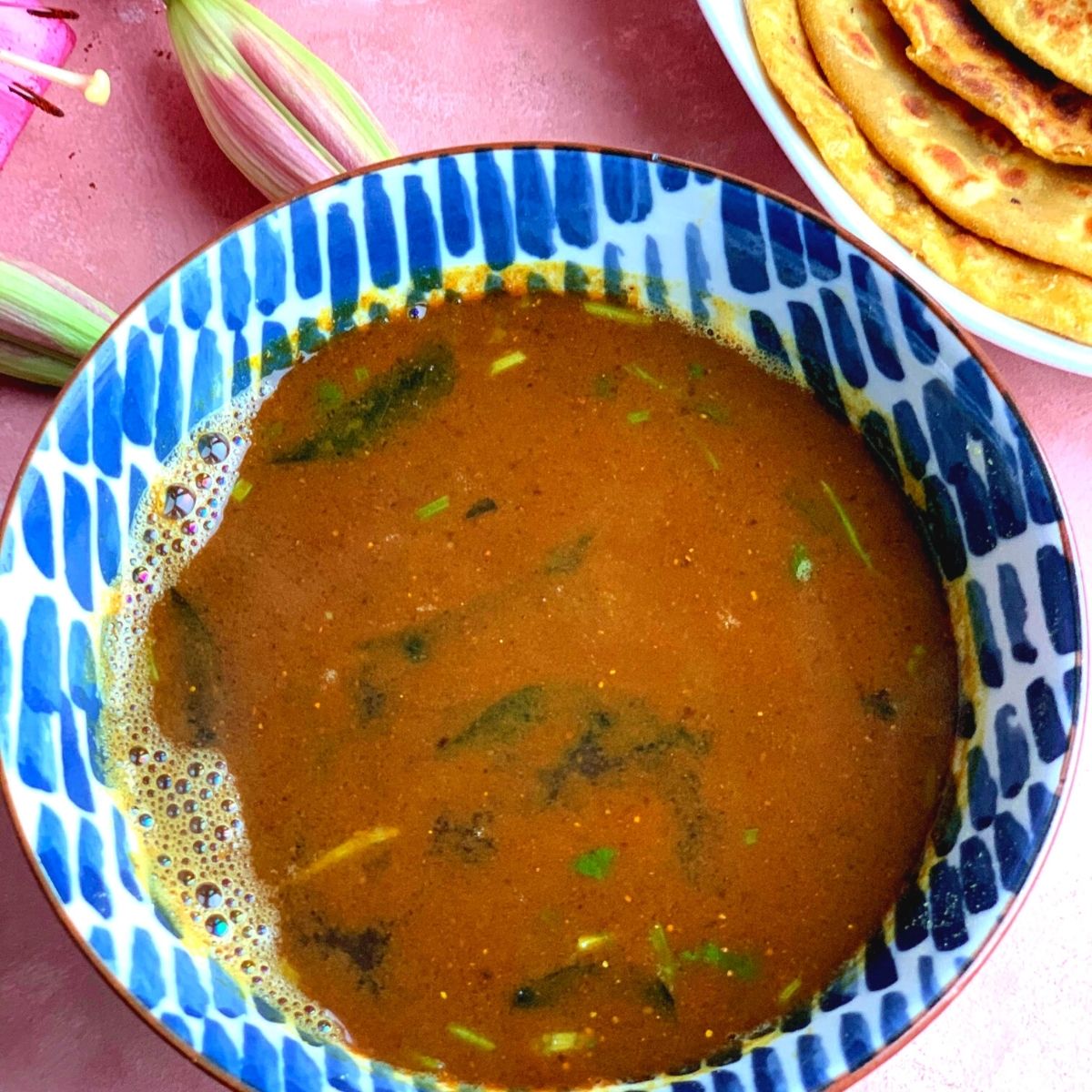
Thin, spicy, tangy, and lightly sweet, Maharashtrian Katachi Amti turns humble chana dal cooking water into a fragrant meal. Its deep color and warm spice aroma make it feel far richer than a simple broth.
Traditionally, the stock comes from cooking chana dal for Puran Poli, so nothing flavorful goes to waste. This vegan, naturally onion-free dish works as a curry, a warming soup, or a pourable accompaniment for rice. Expect a thin texture, bright tamarind, gentle jaggery sweetness, and a preparation time of about 45 minutes, plus soaking.
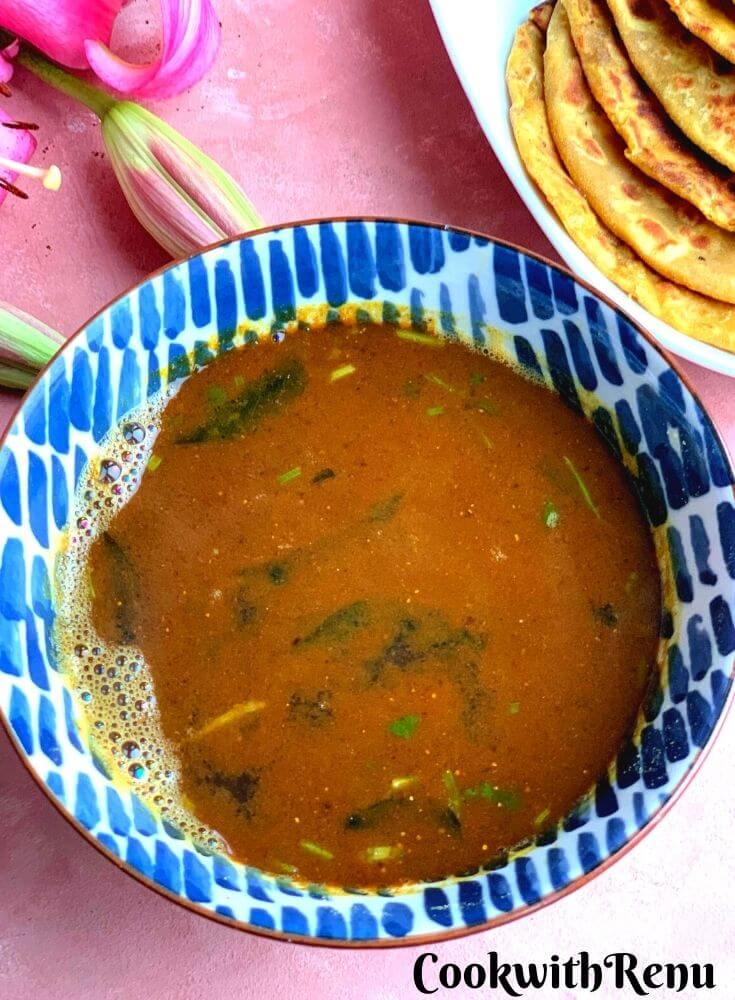
What Is Maharashtrian Katachi Amti?
Katachi Amti is a traditional Maharashtrian curry made with kat, the strained liquid left after cooking chana dal. The cooked dal usually goes into the sweet filling for Puran Poli, while the stock becomes the base for this savory amti.
Some households use only the stock. Others stir in a little cooked dal for body or add onion to their version. However, the classic festive style is often onion-free.
Tamarind brings sourness, jaggery adds sweetness, and red chili provides heat. Roasted coconut, sesame, coriander, and whole spices round out the flavor. The finished dish is closer to a thin dal or broth than a thick curry.
Ingredients That Build Its Deep, Balanced Flavor
Start with the stock:
- 1 cup chana dal, 3 cups water, salt, and turmeric
- Strained chana dal stock for the finished amti
For the roasted masala, gather 2 tablespoons dry coconut, coriander seeds, sesame seeds, cinnamon, peppercorns, green cardamom, and cloves. If grated dry coconut isn't available, desiccated coconut works well.
The final pot needs oil, curry leaves, turmeric, red chili powder, tamarind, 1 tablespoon jaggery, salt, and extra water.
Why the Freshly Roasted Masala Matters
Slow roasting releases the nutty aroma of coconut and sesame while waking up the coriander and whole spices. Roast each ingredient separately when possible, or keep the heat low and watch the pan closely. (Check my video here to see how I have roasted it)
Coconut and sesame burn fast, and a scorched masala can make the amti bitter. Let the roasted mixture cool completely before grinding it into a fine, fragrant powder.
Build Flavor in Two Stages
The stock brings the dal's mellow flavor, while the masala gives the curry its character. Keeping them separate until cooking helps the spices bloom in oil instead of tasting raw.
Katachi Amti should pour easily from a ladle. Add water gradually until it has the consistency of a light soup.
How to Make Katachi Amti From Chana Dal Stock
Soak the chana dal for about 1 hour, then rinse it well. Pressure cook it with 3 cups of water, salt, and turmeric until the dal is very soft. Pressure cooker timing varies by model, while an Instant Pot generally takes about 10 minutes under pressure.
Strain the cooked dal and reserve the liquid. Save the soft dal for Puran Poli, a dal salad, or another meal. The stock is the foundation of Maharashtrian Katachi Amti, so don't discard it.
Prepare the Roasted Coconut and Spice Masala
Dry roast the coconut until lightly browned. Next, roast sesame seeds, coriander seeds, cinnamon, cloves, cardamom, and peppercorns over low heat.
Stir constantly, especially after adding coconut and sesame. Once cool, grind everything finely. A heavy-bottomed pan helps prevent hot spots that can darken the spices too quickly.
Simmer the Stock With Tamarind, Curry Leaves, and Jaggery
Soak tamarind in about ¼ cup water for 15 to 20 minutes. Squeeze and strain the pulp, removing seeds and fibers before adding it to the stock.
Warm oil in a heavy-bottomed pan and cook the ground masala gently. Add curry leaves, turmeric, red chili powder, tamarind liquid, salt, chana dal stock, and enough water for a thin consistency. Bring it to a boil, add jaggery, then simmer for 8 to 10 minutes.
The amti is ready when its aroma is blended, the sharp tamarind has softened, and a light sheen of oil appears on top.
How to Adjust Katachi Amti to Your Taste
Every home has its own balance of sour, sweet, spicy, and savory notes. Add water for a more soup-like amti, or stir in a spoonful of cooked dal for a fuller curry.
Use extra tamarind when you prefer a brighter sourness. Add a little more jaggery for sweetness, or increase the red chili powder for heat. Onion is optional, but you can leave it out without losing the dish's traditional character. I have never used Onion in this.
Taste After the Simmer
Don't judge the flavor as soon as the ingredients enter the pan. Tamarind, jaggery, and spices need time to blend while the curry simmers.
Taste near the end, then adjust in small amounts. Adding jaggery too early can mute the sharper spice and tamarind notes.
Let It Rest Before Serving
Katachi Amti often tastes better after a few hours because the roasted masala has time to settle into the stock. Overnight refrigeration can deepen the flavor further.
Reheat gently and add a splash of water if needed. Stir well before serving because the spices may settle at the bottom.
What to Serve With This Vegan Maharashtrian Curry
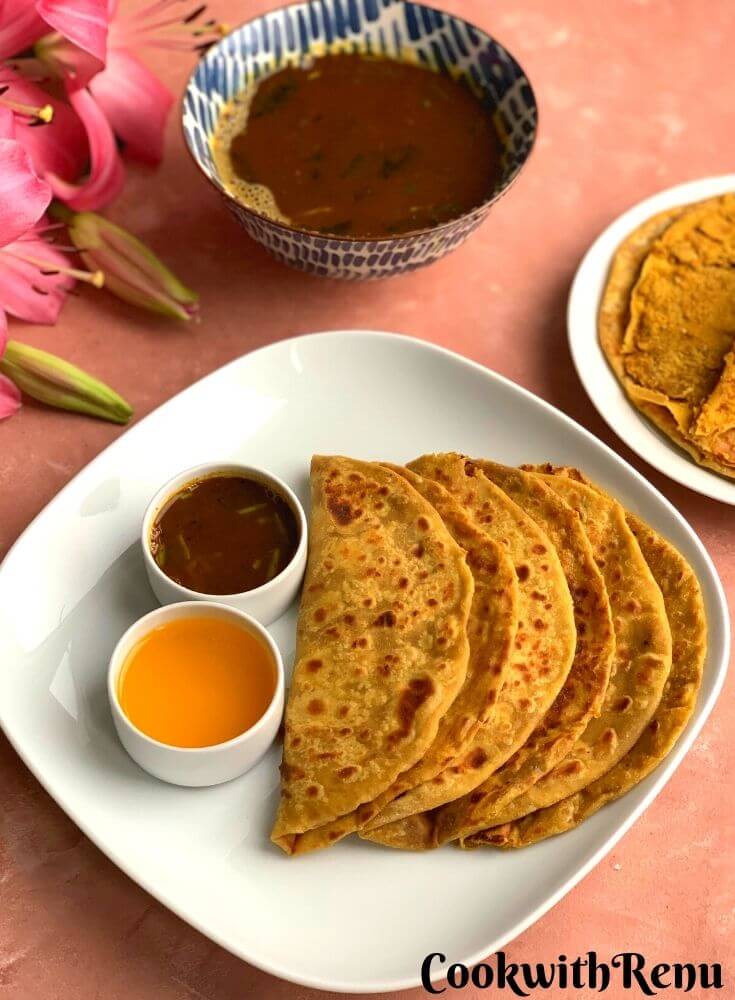
Puran Poli is the classic companion, since both dishes begin with the same cooked chana dal. The sweet flatbread and tangy, spicy amti balance each other beautifully.
Steamed rice, jeera rice, and Maharashtrian tendli bhaat also suit this pourable curry. Serve it hot over rice, or drink it from a bowl like a warm soup.
Storing, Reheating, and Using Leftover Amti
Cool the amti promptly and refrigerate it in a covered container. Follow standard food safety practices, and reheat leftovers until hot throughout.
The curry may thicken or settle in the refrigerator. Stir in a little water while reheating to restore its light texture. Make extra when you can, because the roasted spices often taste even better the next day.

Maharashtrian Katachi Amti (Vegan Curry)
 Print
Pin
Rate
SaveCook ModeShare Recipe
Print
Pin
Rate
SaveCook ModeShare RecipeIngredients
To cook the Chana Dal
- 1 Cup Chana Dal / Split Bengal Gram
- Salt
- ¼ teaspoon turmeric powder
- 3 cup Water
To make Fresh Masala
- 2 tablespoon grated Dry coconut or Desciatted
- 1 tablespoon Coriander seeds
- 1 tablespoon sesame seeds
- ⅛ inch cinnamon A small piece
- 4-5 black peppercorns
- 1 green cardamom
- 2-3 cloves
To make Katachi Amti
- 1 Cup Cooked Chana Dal Stock
- 7-8 Curry leaves
- 1 tablespoon Oil
- ¼ teaspoon Turmeric powder
- 1 teaspoon Red chilli powder
- 1 tablespoon Tamarind (soaked in ¼ cup water)
- 1 tablespoon Jaggery powder
- Salt
- Water as required
- ¼ Cup Water
Instructions
To cook the Chana Dal
- Clean and soak the chana dal in enough water for 1 hour.1 Cup Chana Dal / Split Bengal Gram
- Drain the water and give it a quick rinse.
- Now add around 3 cups of water, salt, turmeric and pressure cook it for 3-4 whistles until soft or mushy. (This might change depending on your pressure cooker)Salt, 3 cup Water, ¼ teaspoon turmeric powder
- For Instant pot; it will take around 10 minutes of pressure cooking.
- Once the dal is done and pressure from the cooker is settled, remove the dal.
- Strain the dal and separate the water.
- The Dal can be used to make Puran Poli
To make Fresh Masala
- Dry roast the grated coconut on slow, until it starts turning brown and keep it aside.2 tablespoon grated Dry coconut
- Dry roast the sesame seeds on slow and add it to the coconut.1 tablespoon sesame seeds
- Similarly dry roast, the coriander seeds, cinnamon, clove, cardamom and pepper corns.1 tablespoon Coriander seeds, ⅛ inch cinnamon, 1 green cardamom, 2-3 cloves, 4-5 black peppercorns
- Let everything cool and then grind it to a fine powder.
Make Tamarind Paste
- Soak the tamarind in ¼ cup of water for 15-20 minutes.1 tablespoon Tamarind, ¼ Cup Water
To make Katachi Amti
- Add the tamarind pulp in the chana dal stock
- In a heavy bottom pan add the oil.1 tablespoon Oil
- Once hot, add the curry leaves and let it spluttern.
- Now add the freshly ground masala powder.
- Keep on stirring and let the masala cook on slow.
- Careful not to burn the masala.
- Now add turmeric powder and red chilli powder.7-8 Curry leaves, ¼ teaspoon Turmeric powder, 1 teaspoon Red chilli powder
- Add in the chana dal stock and tamarind pulp mixture.1 Cup Cooked Chana Dal Stock
- Add water and salt and give everything a nice mix.Salt, Water
- Let the mixture come to a boil.
- Now add the jaggery and let the gravy simmer for 8-10 minutes.1 tablespoon Jaggery powder
- Once done, you will see the oil floating on the top.
- I have used less oil, so could not see much, but if you are using more, it is an indication that the amti is cooked.
- Serve it hot with Puran Poli or Jeera Rice.
Video
Notes
- 1 Cup = 240 ml, 1 tablespoon = 15 ml, 1 teaspoon = 5 ml
- Desiccated coconut can be used if dry is not available.
Updates
This post was first published on my blog on 30th September 2020. Today, the 14th September 2026, I am updating the content. The recipe remains the same.
Sharing this with
Earlier, I shared this as part of the BM,
Check out the Blogging Marathon page for the other Blogging Marathoners doing BM#116
Tried this recipe? Please comment and rate the recipe. Share your pics and tag us.
Subscribe to my email list to get the new recipes straight into your mailbox.
Join our Whatsapp Community to get direct recipe links. Join here.

Indian Cooking Confidence Guide
Learn the basics. Build confidence. Enjoy simple Indian cooking.
I remember enjoying this one when I made it..excellent way to enjoy the dal...Thanks for the wonderful themes, surely came up with very good ones!
This is quite similar to theGujju dal , but the dal differs , very interesting flavors and I am sure the freshly pounded spices lend a amazing flavor and aroma to the dal .
I would love that bowl of amti. The freshly ground spices is indeed a bomb and I bet that makes this amti so so delicious.